Skip to content

Why Knowing How to Fill Out an Invoice Correctly Protects Your Cash Flow
Mastering how to fill out invoice fields—every client name, due date, and invoice amount—puts you in direct control of incoming money. When you understand how do i fill out an invoice and apply those skills consistently, customers have no excuse to delay payment, and your bank balance stays predictable.
The link between accurate invoices and on-time payments
Businesses that learn how do you fill out an invoice precisely experience fewer payment disputes. Each document clearly shows the invoice requirements your customer’s accounting software expects, from the invoice number to crystal-clear invoice payment terms.
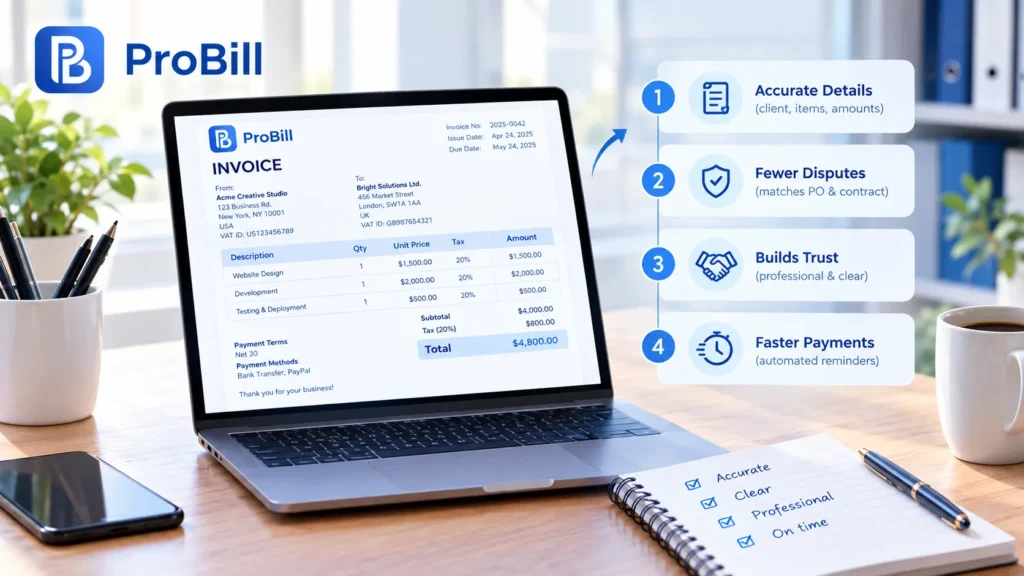
- Accuracy removes friction: an invoice that matches the PO and contract speeds automatic approval workflows.
- Clarity builds trust: well-laid-out invoice templates signal professionalism and discourage queries that freeze cash.
- Automation reinforces punctuality: feeding correct data into a free invoice generator or your own system triggers reminders before the due date.
Include the main keyword—how to fill out invoice—on every bill you issue, and pair it with well-written invoice terms and conditions to set legal expectations. The result is a smoother procurement-to-pay cycle and faster deposits.
Common consequences of missing or wrong invoice details
Overlooking even a single field when figuring out how to prepare an invoice can choke cash flow. Typical setbacks include:
- Rejected payments: Banks and AP portals automatically flag invoices missing VAT IDs or correct invoice amount figures.
- Costly rework: Staff must research how to type an invoice again, burning billable hours that could serve clients instead.
- Damaged relationships: Repeated errors erode trust, pushing buyers to alternative vendors listed in their invoice resources by industry library.
Every omission—from address typos to skipped line items—extends your Days Sales Outstanding. Avoid that trap by using Create Invoice or simply create an invoice online with guided prompts that verify all invoice details before sending. Knowing how to fill out invoice forms correctly today prevents tomorrow’s cash crunch.
Invoice Requirements 101: Every Detail You Must Include
From headline to footer: mandatory invoice details that meet tax laws
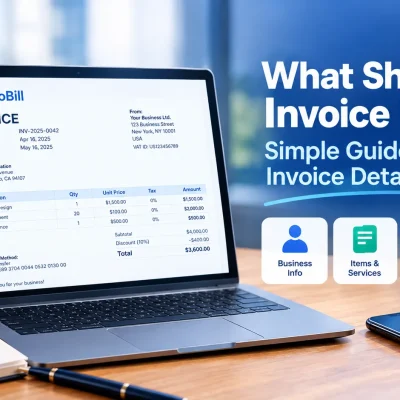
Tax authorities from the IRS to the European Commission demand specific invoice requirements. Anyone learning how to fill out invoice fields must include every element below or risk a rejection:
- Seller identification — legal business name, full address, and tax/VAT ID.
- Buyer identification — client name and billing address that match the purchase order.
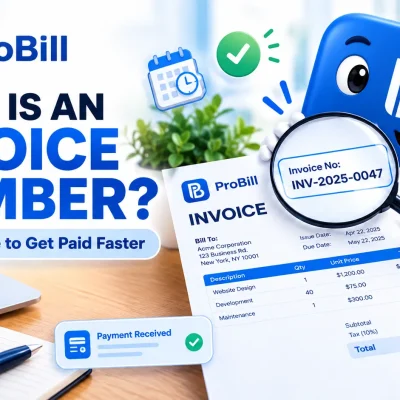
- Unique invoice number generated in an unbroken sequence.
- Issue date and, where different, supply date; regulators reference these to determine tax periods.
- Itemized descriptions that show quantity, unit price, tax rate, and subtotal for each line.
- Calculated tax amount plus the grand invoice amount in the stated currency.
- Clear invoice payment terms including exact due date and approved payment methods.
- Legally binding invoice terms and conditions that cover late-fee clauses and dispute windows.
- Purchase-order or contract reference so the client’s AP robot matches documents instantly.
- Tax breakdowns (e.g., VAT, GST) required under EU rules — see the European Commission guidance on VAT invoicing (https://taxation-customs.ec.europa.eu/vat-invoicing-rules_en).
Consult the full checklist in what an invoice should include and load it into your favorite invoice templates. Mastering how to fill out invoice data to this standard eliminates compliance headaches and lets Create Invoice validate every field automatically.
Optional but powerful elements that speed up client approval
Beyond statutory basics, strategic extras show you know how to fill out invoice paperwork for rapid sign-off:
- Early-payment discount line (e.g., “2% Net 10”) triggers instant management approval.
- Dynamic QR code linking to a payment portal produced by our free invoice generator.
- Project milestones or time-entry reports that answer “how do i fill out an invoice for hourly work?” without follow-up emails.
- Client-specific fields pulled from the invoice resources by industry database—critical when learning how to prepare an invoice for healthcare, construction, or SaaS.
- Bank routing details in both IBAN and SWIFT formats so overseas payers know exactly how to type an invoice remittance.
- PDF attachments of signed work orders—because when a controller asks “how do you fill out an invoice that matches the contract?” you already have proof.
Add these extras while you create an invoice online with the same tool and you’ll notice fewer “Please revise” emails. Whether you’re figuring out how to fill out invoice lines for the first time or refining mature workflows, embedding these details turns a simple document into a payment magnet.
Step-by-Step Guide: How to Fill Out an Invoice (and Get Paid Faster)
Header to totals: filling in each invoice amount field the right way
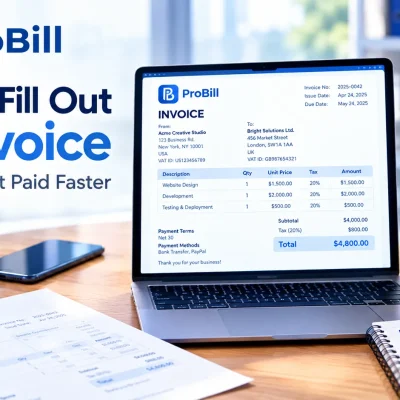
Mastering how to fill out invoice screens in a disciplined order removes guesswork and slashes approval time. Follow this eight-step flow on any platform—paper, accounting software, or the free invoice generator—and every invoice amount will reconcile on the first try.

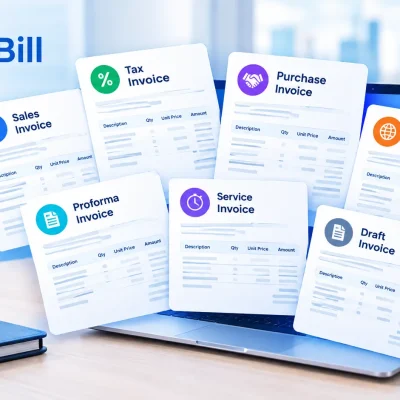
- Open your preferred invoice templates or click “New Invoice” inside Create Invoice. Title the document “Invoice” and add today’s date.
- Generate a unique invoice number; most users let the system auto-increment so compliance stays airtight.
- Populate seller and buyer names, legal addresses, and tax IDs exactly as shown on the PO. If you’re unsure, cross-check the quick list in what an invoice should include before moving on.
- Drop in the client’s purchase-order or project code—crucial when you learn how do you fill out an invoice for regulated industries using the invoice resources by industry library.
- Itemize products or services. For each line, type the description, quantity, unit price, and applicable tax rate. Verify every subtotal; precision here dictates the final invoice amount you’ll collect.
- Let the software calculate tax and the grand total, or apply a simple spreadsheet formula if you’re learning how to type an invoice manually. Double-check currency symbols to avoid underpayments.
- Insert crystal-clear invoice payment terms (e.g., “Net 30, ACH preferred”). Stating terms in bold near the total reminds approvers of their deadline.
- Finish with enforceable invoice terms and conditions, then proof every field. This final scan is the secret weapon in how to prepare an invoice that never bounces.
Use this checklist every time you wonder “how do i fill out an invoice without errors?” and your cash flow will thank you.
Sample walk-through: how do I fill out an invoice in under five minutes?
Need speed? Here’s how to fill out invoice data in real time—reach “Send” before your coffee cools.
• Minute 0: Navigate to the free invoice generator and tap “Start.” Choosing a template shaves seconds off formatting and shows you instantly where each invoice amount will appear.
• Minute 1: The app autogenerates the next invoice number while you paste seller and client info. Because the fields are pre-labeled, even first-timers asking how do i fill out an invoice can’t miss a requirement.
• Minute 2: Import your time sheet or product list; line items populate automatically. Watching tax and totals recalculate live clarifies how to prepare an invoice that matches the PO.
• Minute 3: Select “Net 15” from the invoice payment terms dropdown, then toggle “Add clauses” to embed standard invoice terms and conditions.
• Minute 4: Hit “Preview” to see exactly how the recipient will view the finished PDF. If you spot a typo, click the field and correct it—no reloads required.
• Minute 5: Press “Send & Schedule Reminders.” You just demonstrated how do you fill out an invoice, trigger automated nudges, and lock in the payment date—all in five minutes.
Whether you prefer to create an invoice online or export a PDF to email, repeating this quick drill cements best practices in how to fill out invoice documents day after day.
Pro Tips for Error-Free Invoicing: Avoid Costly Mistakes and Disputes
Perfecting how to fill out invoice fields is only half the battle; the other half is building fail-safe routines that catch slip-ups before your client does. Apply the tactics below and you’ll minimise disputes, comply with every invoice requirements checklist, and protect each invoice amount you’re owed.
Double-checking math, dates, and purchase order references
A three-point verification process keeps the most common errors—mis-keyed figures, wrong service dates, and mismatched POs—off your radar forever.
- Reconcile numbers in order: subtotal → tax → grand total. Confirm each formula mirrors the layout in what an invoice should include.
- Validate chronology: the issue date, supply date, and due date must align with your invoice payment terms—a mismatch is the #1 trigger for automated rejections in most AP portals.
- Cross-match identifiers: PO code, invoice number, and contract ID must reference the same job. If you wonder, “how do you fill out an invoice that matches every control?”, keep the PO open beside your draft.
Before clicking Send, open the PDF preview inside the free invoice generator and perform a 30-second scan for text-to-PO alignment. This single habit answers the nagging question “how do i fill out an invoice without typos?” while cutting dispute rates dramatically.
Automating recurring invoices to eliminate manual slip-ups
Subscription or retainer work multiplies risk: the more times you re-enter invoice details, the higher the chance of error. Automation removes that repetition.
• Load an industry-specific template from the invoice resources by industry library. It already embeds statutory invoice requirements like VAT fields and late-fee clauses.
• Convert the file into a schedule inside Create Invoice. The system will replicate line items, due dates, and invoice terms and conditions exactly—no more wondering how to type an invoice for the fifteenth time this year.
• Personalise the schedule: choose weekly, monthly, or milestone triggers. Automated reminders ensure clients see every bill on day one, a crucial step in how to prepare an invoice cycle that never slips through the cracks.
• When rates change, edit the master record once; every future invoice amount updates automatically, preserving compliance with invoice templates and stopping “old price” disputes before they start.
Whether you’re still asking, “how to fill out invoice fields for a retainer?” or refining a mature workflow, automation through create an invoice online empowers you to scale without sacrificing accuracy. And if a client asks, “how do you fill out an invoice so fast?”, show them your dashboard—the proof is built in.
Digital Shortcuts: How to Type and Prepare an Invoice Instantly With Create Invoice
One-click templates vs. DIY spreadsheets—speed and compliance compared
Relying on spreadsheets still leaves you typing every column header, formula, and tax line—time that disappears the moment you open the file. One-click invoice templates inside Create Invoice preload every mandatory field so you can focus on how to fill out invoice data, not formatting rules.
| Feature | One-click template (Create Invoice) | DIY spreadsheet |
|---|---|---|
| Setup time | <30 seconds—select template, auto-populate logo & seller info | 15–20 minutes—design columns, copy formulas |
| Built-in invoice requirements | Yes—VAT, invoice number, buyer ID, invoice payment terms | Manual entry; high chance of omissions |
| Error prevention | Real-time validation flags missing invoice details before send | None—errors surface only after client review |
| Compliance updates | Auto-push when tax law changes (e.g., new digital VAT rules) | You must update every sheet individually |
| Automation hooks | One click to schedule recurring bills via the free invoice generator | Requires macros or external scripts |
| Audit trail | Immutable PDF + cloud history meets government e-archiving rules (see the EU’s e-Invoicing Directive) | Local files; version control depends on user |
If you still wonder “how do i fill out an invoice fast without missing an invoice amount?”, templates prove up to 80% quicker than spreadsheets, according to a 2023 APQC process benchmark. Choosing the digital route also slashes compliance risk because every new regulation is hard-coded—no need to learn how to type an invoice footer from scratch each quarter.
Free trial walk-through: create, send, and track your first invoice today
Signing up for the Create Invoice free trial takes less time than finding your old spreadsheet. Follow these steps and you’ll master how to prepare an invoice—plus watch real-time tracking—before lunch.
- Visit create an invoice online and click “Start Free Trial.” The wizard clones your business profile so you never re-enter legal names or tax IDs.
- Pick a sector-specific layout from the invoice resources by industry gallery. Every template embeds the latest industry invoice requirements, ensuring you never forget critical invoice details like service dates or NAICS codes.
- Add the client and project code; smart fields instantly map PO data to each line. This step answers the perennial “how do you fill out an invoice that matches the contract?” while keeping the interface clutter-free.
- Drag in your CSV of billable items. Quantities, unit prices, and tax rates drop into place and the platform auto-calculates each subtotal and grand invoice amount—no formulas, no rework.
- Toggle “Terms” to pull in your default invoice terms and conditions and confirm the due date. If you need to tweak language on late fees, inline editing makes the change in seconds.
- Hit “Send & Track.” Clients receive a branded PDF plus a payment portal link generated by the free invoice generator. Your dashboard now shows live status—Viewed, Approved, or Paid—so you know exactly where money is stuck.
This micro-workflow demonstrates how to type an invoice, how to fill out invoice fields correctly, and how to monitor payment in the same tab. Even first-timers asking, “how do i fill out an invoice without chasing clients?” get automated reminders and delivery receipts baked in. In minutes, you’ve satisfied every statutory checkbox listed in what an invoice should include and proven that digital shortcuts beat spreadsheets every time.
Frequently Asked Questions About How to Fill Out an Invoice
How do you fill out an invoice if you charge sales tax?
When learning how to fill out invoice fields with sales tax, list the taxable subtotal, the exact tax rate, and the calculated tax line before showing the final invoice amount. Most U.S. states require the seller’s tax registration number, so confirm local rules on your state’s Department of Revenue site (e.g., New York’s guide: https://www.tax.ny.gov/pubs_and_bulls/tg_bulletins/st/what-is-sales-tax.htm). Double-check that these invoice details appear in the same order shown in our full checklist at what an invoice should include. Doing so keeps you compliant and eliminates buyer questions about how do you fill out an invoice that includes tax.
What’s the difference between an invoice number and a reference number?
An invoice number is a unique, sequential identifier required by law and many accounting systems; a reference number is optional and usually ties the bill to a purchase order, job ticket, or shipment. Using both makes it easier for clients to reconcile payments and for you to track cash—two essentials in how to prepare an invoice that never gets lost.
Can I edit an invoice after I’ve sent it to the client?
Yes, but create a new document marked “Revised” or “Credit Note” rather than altering the original file, preserving your audit trail. Cloud tools like the free invoice generator let you duplicate the bill, adjust the invoice amount, and re-issue it with a new date and number. Following this workflow answers “how do i fill out an invoice correction?” while satisfying standard invoice requirements for version control.
How to prepare an invoice for international customers?
First, choose locale-specific invoice templates that automatically switch currency symbols and add IBAN/SWIFT fields. Next, check tax rules in your export market—EU buyers, for example, expect VAT breakdowns that match their PO, as detailed on the European Commission site . The invoice resources by industry library also shows country-specific invoice requirements so you understand how to fill out invoice data that clears customs and foreign AP portals.
Do freelancers need different invoice requirements than companies?
Freelancers typically follow the same statutory fields—name, address, tax ID—but may add personal bank details or digital wallet IDs. Platforms like Create Invoice let sole traders embed these extras without changing the core template, so you never wonder “how do you fill out an invoice as a one-person shop?” while still looking professional.
How to handle partial payments and adjust the invoice amount?
State the agreed schedule in your invoice payment terms and reference it in the corresponding invoice terms and conditions. Each time a partial payment arrives, issue a receipt or a revised invoice showing the remaining balance; this transparent record is the cleanest answer to “how to type an invoice update” without confusing your client’s ledger.
What file format should I use when emailing an invoice?
Send invoices as locked PDFs; they preserve formatting, prevent edits, and satisfy most e-invoicing regulations worldwide. Tools that let you create an invoice online export compliance-ready PDFs in one click, ensuring every recipient sees the same invoice details and understands exactly how do you fill out an invoice they can approve quickly.