Skip to content

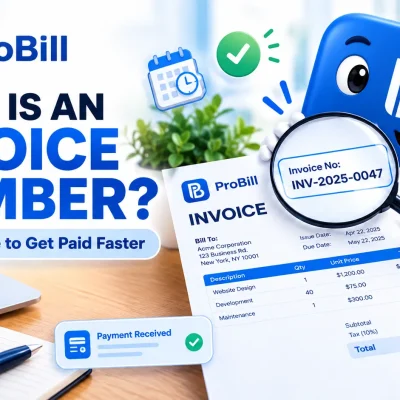
What Is an Invoice Number? Understanding the Backbone of Every Bill
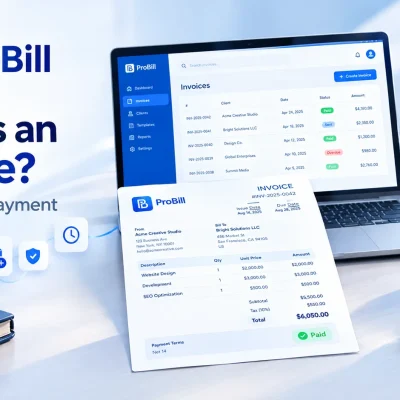
If you’ve ever Googled “what is a invoice number,” you already know it’s the most–searched detail after price on any bill. The tiny sequence printed near the top of a document is how companies synchronize payments, taxes, and inventory, making it the backbone of every bill you send through the Create Invoice platform or anywhere else. For readers who still confuse the code with PO numbers or dates, this section breaks down the invoice number meaning, purpose, and how it differs from an invoice ID—without repeating the basics of what an invoice is.
Invoice Number Meaning and Purpose in Billing
Business owners often ask, “what are invoice numbers and why do they matter?” In short, an invoice number is a unique, sequential identifier that legally and financially validates a sale. Whether you build a bill from scratch or start with professionally designed invoice templates, the number performs three core jobs:
- Establishes an auditable trail for tax authorities and stakeholders.
- Matches incoming payments to the correct customer account fast, cutting down on disputes and late-fee conversations.
- Organizes data for analytics—think forecasting, aging reports, or sorting bills by project in the free invoice generator.
These tasks explain what’s an invoice number at its core: the digital fingerprint that ties every line item, date, and subtotal together. Companies operating across multiple sectors can even adapt numbering rules with invoice resources by industry to stay compliant with local regulations. If you’re still unsure where is the invoice number on a receipt, look near the header; modern POS systems label it clearly so no one must wonder “where is invoice number on receipt” again.
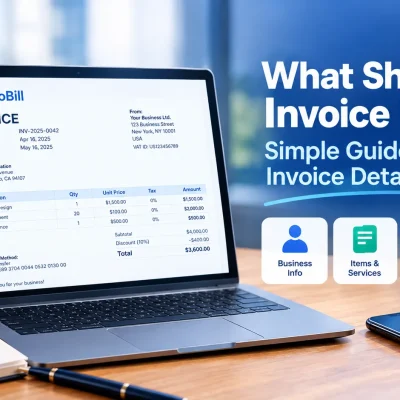
For founders setting up accounting software, follow the step-by-step guide on how to create an invoice number to avoid duplicates. And if you’re mailing paper statements, consult how to fill out an invoice so the reference lands exactly where clients expect to see it.
Invoice Number vs. Invoice ID: Is There a Difference?
“What is an invoice id; is it identical to the number on my PDF?” Technically, an invoice ID is a database record, while the printed code people see is the invoice number. In most small-business apps the two match, but they can diverge:
- Invoice numbers must be sequential to meet audit standards in regions like the EU and Canada (see official VAT guidance at the UK’s HMRC ).
- Invoice IDs can be alphanumeric or random because they live only inside software tables.
So, what is the invoice number in practice? It’s the client-facing code you share for payment, the one bank transfers reference to settle the balance. By comparison, the invoice id stays behind the scenes to let your accounting stack link attachments, time logs, or notes.
Understanding the split prevents costly errors. Duplicate invoice numbers create reconciliation headaches, whereas duplicate IDs rarely harm compliance. That’s why tutorials on what an invoice should include stress numbering discipline. If you still type “whats invoice number” into search boxes, remember: public, sequential, and immutable—those traits belong to invoice numbers, not necessarily to every hidden invoice id.
Now that you know where is the invoice number on a receipt and how it contrasts with an ID, you can answer confidently the next time someone asks, “what’s an invoice number, and why should I care?”
The Business Benefits of Accurate Invoice Numbers
Precise invoice numbers don’t just tidy up paperwork—they directly influence how fast money reaches your bank and how safely you pass every audit. Whether you bill through the Create Invoice web app or still mail paper statements, treating numbering as a business asset pays dividends.
How Correct Invoice Numbers Speed Up Payments and Cash Flow
Late-payment studies show that mismatched references account for up to 18% of processing delays (source: Association for Financial Professionals). Using accurate, sequential invoice numbers removes that bottleneck by giving buyers, banks, and gateways the same unambiguous reference.
Instant recognition in AP portals
When the code on your PDF matches the buyer’s purchase-order field, automatic matching kicks in. Users of the free invoice generator can pre-set numbering patterns so every outgoing bill lands in the “ready to pay” queue instead of “exception” status.Fewer customer queries
A client who can answer “where is the invoice number on a receipt?” never needs to email support. Clear placement—see how to fill out an invoice for a visual—is the fastest way to cut dispute cycles.Seamless reminders and auto-pay
Cloud platforms pull the string of invoice numbers to trigger reminders and recurring charges. If you rely on invoice templates, one typo can break that chain and stall subscriptions for weeks.Cleaner cash-flow forecasting
Finance teams filter aging reports by invoice number meaning they can instantly spot overdue accounts, adjust credit limits, and negotiate early-payment discounts.
Still Googling “what is a invoice number” or “whats invoice number” while wondering why your accounts receivable lags? Accurate invoice numbers are the simplest, cheapest accelerator you’ll ever deploy.
Compliance, Audits, and Legal Requirements You Can’t Ignore
Regulators don’t care what’s an invoice number called in your software—they care that it’s unique, sequential, and immutable. From the EU’s VAT rules to the IRS record-keeping mandate, non-compliance can trigger fines of up to $10,000 per missing document (IRS Pub. 583).
• Audit-ready sequencing
Accurate invoice numbers form the chronological trail auditors demand. The HMRC VAT notice highlighted earlier insists that gaps or duplicates raise red flags. Consult how to create an invoice number to build region-specific sequences, or lean on invoice resources by industry for niche rules.
• Traceability between systems
Your ERP may store an internal invoice id, but external auditors follow the printed code. Mapping each invoice id to its public counterpart ensures you can prove “what is the invoice number” for any transaction within seconds.
• Proof against fraud
Consecutive invoice numbers make it almost impossible to slip phantom bills into your books. That’s why what an invoice should include always starts with a validated reference.
• Legal evidence in disputes
Courts frequently accept the numbering trail as proof of delivery and payment obligations. Knowing exactly where is invoice number on receipt—and keeping that same reference across contracts—shortens litigation time.
Still asking “what are invoice numbers” or “what is an invoice id” during tax season? Accurate invoice numbers are your first line of defense, your fastest reconciliation tool, and your easiest way to satisfy every jurisdictional checklist.
Proven Methods to Assign and Track Invoice IDs
Sequential vs. Custom Formats: Choosing the Right System
Before deciding how to build every invoice ID, map your legal and operational needs against two proven numbering formats.
- Sequential numeric (001, 002, 003)
• Best for jurisdictions that mandate gap-free audit trails; see step-by-step setup in the guide on how to create an invoice number.
• Simplifies reconciliation because an out-of-order code instantly flags a missing bill. - Custom alphanumeric (2024-NYC-ACME-001)
• Packs project, client, or location data into one glance—handy if you juggle several verticals covered in our invoice resources by industry.
• Works around duplicate risks by combining letters and numbers, yet you must still index each invoice ID in your ledger.
Use this quick checklist to choose:
• Statutory rule? Go sequential.
• Multiple brands or currencies? Layer in prefixes.
• Need staff to spot errors fast? Keep the string under 15 characters.
Whatever you pick, sync the hidden invoice id with the public reference so no one wonders “where is invoice number on receipt” during audits. If your team still asks “what is a invoice number” or “whats invoice number,” point them to the labelled header in your invoice templates and remind them that invoice number meaning hinges on staying unique across periods.
Automating Invoice IDs with Accounting Software (Free Trial Inside)
Manual logs die the moment sales spike. Activate auto-generation inside the Create Invoice dashboard (free trial available) and let the system handle every new invoice ID:
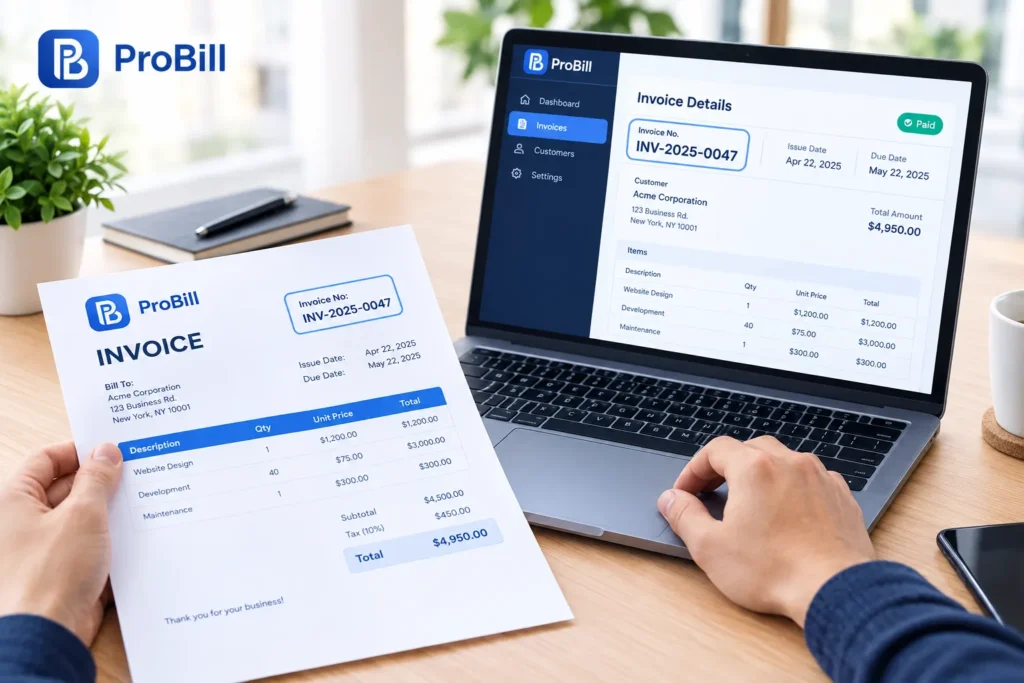
- Pick a base pattern—numeric or alphanumeric—and set the next counter.
- Enable duplicate blocking so the software refuses any reused string.
- Turn on API sync; each sale from the free invoice generator now inherits the master sequence.
- Map the printed code to accounting fields defined in what an invoice should include so bank feeds match automatically.
Automated tracking means your staff no longer needs to ask “what are invoice numbers,” “what’s an invoice number,” or “what is the invoice number for this client.” The system stamps the reference, files it under the correct customer, and logs exactly where is the invoice number on a receipt for future lookup. For added clarity, embed a tiny tooltip linking to what an invoice is so new hires grasp context without extra training.
Need to back-date a batch? Use the bulk-edit console, then cross-verify with the progress bar that highlights any skipped invoice numbers. Finally, export the ID list to CSV before month-end close and attach it to the files you complete via how to fill out an invoice. That single workflow ends the “what is an invoice id” mystery and keeps every invoice ID, number, and payment in perfect sync.
Where to Find the Invoice Number on a Receipt & Other Real-World Examples
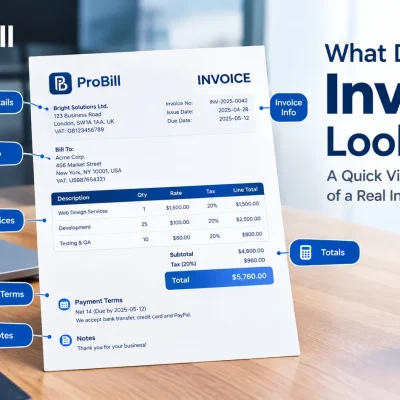
Where Is the Invoice Number on a Receipt? A Visual Guide
Walk into any store, download a PDF bill from the Create Invoice dashboard, or open a restaurant slip and you’ll spot the invoice number almost immediately—if you know where to look. The code is critical, which is why every POS or billing system labels it clearly so no one has to google “where is invoice number on receipt” during month-end close.

Header zone
The vast majority of retail and online receipts place the string in the upper-right corner, just below the business logo. Designers do this because eye-tracking studies show customers scan top-right areas first. If you build documents with our invoice templates, the field is locked there by default, eliminating any “what is the invoice number” confusion.Near the date–time stamp
Thermal paper rolls often have limited width. To save space, some vendors print the reference beside the clock stamp (e.g., “INV# 48217 | 06/05/24 14:07”). That layout still satisfies audit rules cited by the IRS (see Publication 583) and keeps reconciliation painless.Footer for kiosk and ticketing machines
Self-serve kiosks sometimes push the code to the bottom so the customer first sees QR payment info. Look for a line that begins with “Inv” or “Ref”; the invoice number meaning stays identical even if its location differs.Digital confirmations
Email or SMS receipts place the string in a bold font near the subject or first sentence—“Your payment for INV-2024-NYC-0008 is confirmed.” This positioning lets AP bots pull data instantly when the file flows into an ERP via the free invoice generator.
Whether it’s printed, emailed, or streamed via API, the answer to “where is the invoice number on a receipt” never changes: it’s the uniquely labelled code that ties the transaction to your ledger. Spotting it quickly means you’ll never again wonder “whats invoice number” when a client calls.
Sample Invoice Number Formats Across Key Industries
Wondering how other firms avoid duplicate invoice IDs while still meeting sector rules? The table below pulls live patterns from five verticals featured in our invoice resources by industry. Use them as inspiration when you follow the tutorial on how to create an invoice number.
| Industry | Typical Format | Why It Works |
|---|---|---|
| Retail (POS) | 00012345 | Pure numeric keeps receipts short for small printers and satisfies sequential laws. |
| Construction | 2024-PROJ-BT-001 | Year + job abbreviation + counter lets teams segment costs by project while keeping invoice numbers gap-free. |
| Healthcare | HC-RX-000567 | Prefix flags medical billing in multi-entity hospitals, crucial for HIPAA-compliant traceability. |
| Creative Agency | NYC-ACME-24-018 | City + client + year + serial streamlines multi-client tracking and clarifies what’s an invoice number for freelancers. |
| SaaS Subscription | SUB-2024-06-0001 | “SUB” keyword plus YYYY-MM helps systems auto-renew and reduces “what is a invoice number” support tickets. |
Notice every pattern is still human-readable—no random invoice id hashes that frustrate customers. If you’re debating “what is an invoice id vs. number,” remember the public string above is the number, while the hidden database key stays inside your software.
Implementing these structures in Create Invoice takes minutes: pick a prefix, set the next counter, and let the platform block repeats automatically. When stakeholders later ask “what are invoice numbers doing for us,” you can point to cleaner ledgers, faster payments, and a complete audit trail—all starting with the simple question, “where is invoice number on receipt?”
Frequently Asked Questions About Invoice Numbers
What’s an invoice number and why is it required?
A quick way to remember what is a invoice number is to see it as the transaction’s fingerprint. The unique code lets the Create Invoice dashboard, your bank, and the tax office match payments to the right document without guesswork. Because the invoice number meaning centers on uniqueness and sequence, it’s required in most jurisdictions to validate sales records and deter fraud—skipping it can void the bill entirely.
What are invoice numbers supposed to include?
When clients ask what are invoice numbers meant to show, the answer is simple: a sequential or structured string that never repeats and clearly identifies each sale. Best practice is to combine a running counter with optional prefixes for year, client, or project so every department can trace the file; see what an invoice should include for layout tips built into our invoice templates. Whatever format you pick, keep the invoice number under 15 characters so customers never have to ask “whats invoice number” again.
What is a invoice number vs. purchase order number?
The purchase order originates from the buyer, while the invoice number is generated by the seller to bill that PO. In other words, what is the invoice number?—your legally binding request for payment; the PO merely authorizes the spend. Mapping both references in one field, as shown in our invoice resources by industry, speeds up matching in AP portals and prevents double data entry.
Can I use letters in my invoice ID?
Yes. Adding letters to the invoice id—such as “2024-NYC-007”—helps sort files by client or location and reduces duplicate risks. Just be sure the alphanumeric pattern still progresses sequentially; the guide on how to create an invoice number shows how to auto-generate mixed strings so you never wonder “what’s an invoice number supposed to look like?” again.
How do I fix duplicate invoice numbers?
First, stop manual edits and turn on duplicate blocking inside the free invoice generator. Next, renumber the clashing records following the steps in how to fill out an invoice, then re-issue corrected PDFs to customers with a brief note. A consistent audit trail ensures accountants never need to search “where is invoice number on receipt” to resolve mismatches.
Does the IRS care about what is the invoice number?
Absolutely. IRS Publication 583 states that sales records must show a unique identifier, making the invoice number compulsory for audits and deductions (source: irs.gov/publications/p583). Using a gap-free sequence—and printing it clearly so users see where is invoice number on receipt—keeps you compliant and ready for any review.