Skip to content

Invoice Payment Terms 101: What They Are & Why They Matter
Clear, consistent invoice payment terms help you get paid faster, protect your legal rights, and keep clients happy. Whether you’re using a free invoice generator or designing custom invoice templates, the section that spells out exactly when and how money is due is the most scrutinized line on every bill. Below we break down the core language you’ll see in any professional invoice and the real-world impact these words have on your cash flow and client relationships.
Defining the core terms of an invoice: net, due, discount & penalties
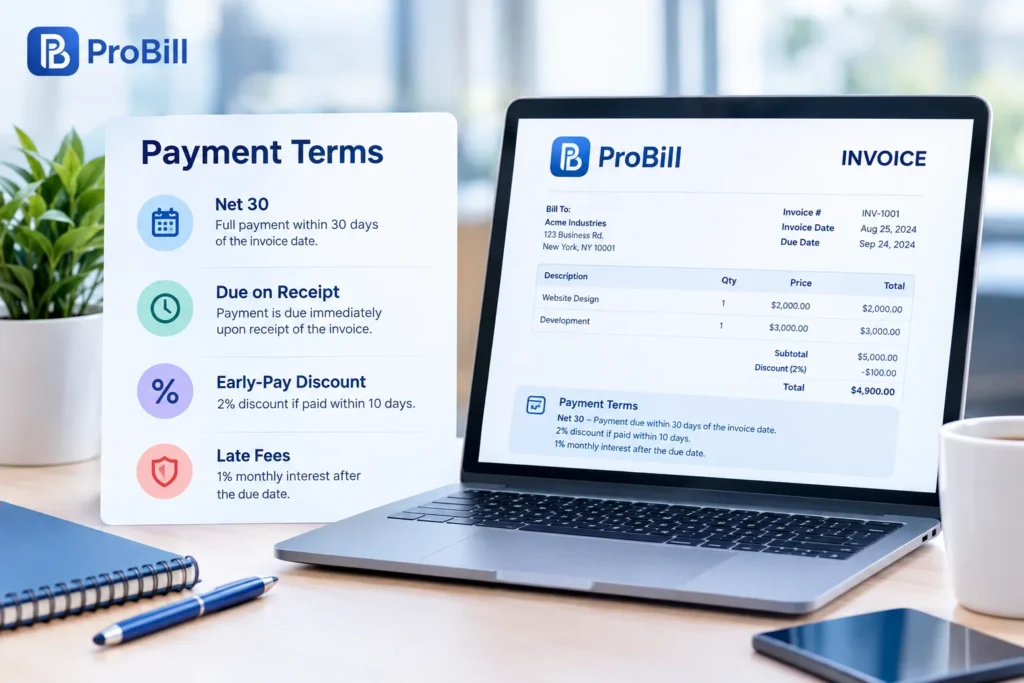
Every set of invoice payment terms relies on four building blocks. Keep these definitions handy when drafting the payment terms on invoice designs or reviewing a customer’s purchase order.
Net terms
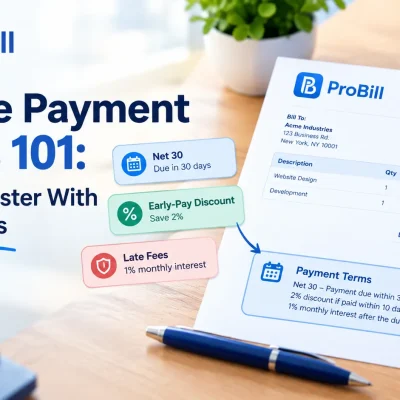
“Net X” tells the buyer the full balance is expected within X days of the invoice date—Net 30 is the classic invoice payment terms example. Because net terms define the maximum window, you can still encourage earlier settlements with early-pay discounts.Due date language
• Invoice due / due invoice: a general phrase meaning payment must be settled by the printed calendar date.
• Due on invoice: signals that the clock starts the moment the document is issued, not when goods are received.
• Invoice due on receipt, invoice due on receipt, or invoice due upon receipt: clarifies that funds should be transferred immediately; no grace period applies.
Using precise “due” language reduces disputes and aligns your invoice payable terms with client expectations.Early-pay discounts
Phrases like “2/10 Net 30” reward buyers who pay within 10 days with a 2 % discount. These invoice terms improve liquidity without borrowing costs. For a deeper dive, see our guide on invoice terms and conditions.Penalties & late fees
If the balance is unpaid after the stated window, interest or flat fees apply. According to Investopedia, businesses commonly charge 1–1.5 % per month to offset risk. Always spell out the percentage or dollar amount and reference jurisdictional limits—our template for invoice late fee wording shows compliant phrasing.
Remember, every one of these terms of an invoice must appear in writing. If you’re unsure what elements belong next to the due date, our checklist on what to include on an invoice covers the essentials.
The business impact: cash-flow, client relationships, and legal protection
The wording of your invoice payment terms directly affects three mission-critical areas.
• Cash-flow stability
Shorter windows (Net 15 vs. Net 30) speed up working capital, letting you purchase inventory and cover payroll without expensive credit lines. Our library of invoice resources by industry shows typical cycles for construction, design, and consulting so you can benchmark effectively. For recurring services, “invoice due upon receipt” often halves Days Sales Outstanding.
• Client experience
Transparent, consistent payment terms on invoice documents set the tone for the relationship. When customers know exactly when funds are expected, you spend less time chasing overdue invoices and more time delivering value. If a client is ever confused, you can point them to the explicitly printed “due on invoice” language they agreed to.
• Legal backup
Well-defined invoice payment terms create an enforceable contract. Should a matter escalate, courts and collection agencies rely on the printed net terms, discount windows, and late-fee clauses to determine liability. Linking each bill to a signed proposal—and saving a digital copy generated via Create Invoice—gives you airtight documentation for any dispute related to invoice payment collection.
Draft your next bill with these principles in mind, and you’ll turn every invoice payable terms section into a strategic asset rather than a post-sale afterthought.
Setting the Right Payment Terms on Your Invoice: A Step-by-Step Guide
Choosing payment terms on invoice documents is equal parts risk management and client communication. Follow the two workflows below to lock in wording that accelerates cash flow without scaring away good customers.
Assessing client risk and industry standards before choosing terms
A smart set of payment terms on invoice cannot ignore creditworthiness or sector norms. Run through this checklist before you decide whether “invoice due on receipt” or a Net 30 window makes sense.
Pull objective credit data
• Check trade references and a business credit score from Experian or Dun & Bradstreet. Low scores justify tighter payment terms on invoice such as invoice due immediately.Compare sector benchmarks
• Use the free charts in our [invoice resources by industry] (https://create-invoice.app/industries/) to see average collection cycles. For instance, creative agencies often tolerate Net 30, while construction subs may insist on Net 15. Aligning with peers reduces friction.Evaluate order size and margin
• High-ticket projects or thin margins leave little room for default. In these cases an invoice payment terms example is “2/10 Net 15”—you still offer an early-pay reward yet cap exposure. Refer back to our in-depth invoice terms and conditions guide for discount math.Weigh client history
• A repeat buyer who has never produced an overdue invoice earned a longer runway than a first-time lead. Store historic data in your free invoice generator so decisions stay consistent.Set penalties last
• Once the core invoice payable terms are chosen, add late-fee language that meets state limits. Our template for invoice late fee wording shows compliant phrasing that courts respect.
Using this five-point screen lets you customize payment terms on invoice documents to real risk instead of guesswork, keeping cash flow predictable and customer relationships intact.
Formatting payment terms for clarity—wording, placement, and legal language

Even perfect credit analysis fails if clients can’t find or understand the payment terms on invoice pages. Ensure every bill passes the readability test:
• Positioning
Place the terms directly under the balance due line in your invoice templates. Eye-tracking studies show it’s the most-scanned area, cutting “I never saw the terms” excuses.
• Plain-English phrasing
Replace jargon with short sentences: “Payment is due on invoice” or “Invoice due upon receipt.” This beats buried legalese and triggers faster action. If you choose Net wording, bold both the net period and the calendar date so the due invoice deadline is unmistakable.
• Consistent keyword cues
Repeat critical phrases—“invoice due on receipt,” “invoice due on receipt,” and “due on invoice”—exactly as they appear in contracts to avoid loopholes. Consistency across all invoice terms creates an enforceable paper trail, as detailed in our invoice payment primer.
• Legal backup
Tie penalties and discounts to clause numbers in the signed proposal. Reference the specific terms of an invoice section—e.g., “See Section 4 for late interest at 1 % per month” (source: Investopedia). Courts look for this cross-reference when adjudicating disputes.
• Automation
Use the saved settings in Create Invoice to auto-populate every new document. Automated fields prevent typos that could undermine otherwise solid payment terms on invoice statements.
• Final compliance check
Run the finished PDF against our what to include on an invoice list to confirm date stamps, tax IDs, and the chosen invoice due language all appear. A missing element can void your claim.
By combining strategic wording placement with airtight legal references, you transform routine copy into a compelling, enforceable signal that the clock is ticking—exactly what effective payment terms on invoice documents are meant to do.
Invoice Payment Terms Examples & Downloadable Templates
Below you’ll find a quick-scan library of every popular invoice payment terms example—Net 30, invoice due on receipt, milestone triggers, and more—followed by free, editable templates you can drop into your own invoice templates. Use them to tighten the payment terms on invoice PDFs, speed up cash flow, and avoid an overdue invoice pile-up.
Quick-reference chart: Net 30, Due on Receipt, Milestone billing, more
| Abbreviation / Phrase | Trigger to Pay | Sample Wording for the due invoice line | Ideal Use-Case | Helpful Add-On |
|---|---|---|---|---|
| Net 15 | 15 days after issue | “Net 15 ‑ payment due on 15 Aug 2024” | High-volume, low-risk repeat buyers | Early-pay discount (see invoice terms and conditions) |
| Net 30 | 30 days | “Balance due on invoice date + 30 days” | Standard B2B services | Automated reminders in Create Invoice |
| 2/10 Net 30 | 2 % off if paid in 10 days; full by 30 | “2/10 Net 30—save 2 % when paid by 10 Aug 2024” | Liquidity-focused sellers | Reference invoice payment policy |
| Due on Receipt | Immediately upon delivery | “Invoice due on receipt—transfer funds today” | Digital downloads, one-off repairs | Include banking details in the “what to include on an invoice” checklist |
| Due Upon Receipt | Same as above, emphasizes no grace period | “Payment is invoice due upon receipt” | Urgent or COD work | Pair with late fee clause from invoice late fee wording |
| Milestone Billing | Pre-defined project stage | “50 % payable when foundation is poured” | Construction, software sprints | Outline stages in contract to nail the terms of an invoice |
| Progress % | Recurring percentage (e.g., 20 % monthly) | “20 % of total project fee invoice due” | Retainers, long builds | Sync with free invoice generator |
| End-of-Month (EOM) | Last calendar day | “Payment due EOM August” | Wholesale orders batched by month | Add aging report to catch overdue invoices |
The chart above lets you compare invoice payable terms at a glance. Embed the phrase that matches your risk profile, then bold the actual calendar date so clients spot the due on invoice deadline instantly.
Editable invoice payment terms example templates for different industries
Download the docs below, drop in your logo, and send—the formatting already highlights the payment terms on invoice PDFs so no one can claim they “never saw it.”
Consulting & Freelance
• Word and Google Docs files pre-filled with Net 15 wording and a 2/10 discount line.
• Links to invoice resources by industry help you benchmark Days Sales Outstanding.Construction & Trades
• Excel template with milestone billing sections and automatic retention calculations.
• Integrated reference to your chosen invoice due on receipt or Net window, plus space for change orders.SaaS & Recurring Services
• Editable PDF featuring “invoice due” on the first of each month and auto-carry-forward for partial payments.
• Built-in anchor text back to your master invoice terms and conditions.E-commerce & Wholesale
• CSV import for batch Net 30 invoices, flat-rate shipping, and EOM triggers.
• Late-fee column already tied to the phrasing in our invoice late fee wording guide.Creative Agencies
• InDesign layout with staged 40/40/20 progress terms; headline shows “invoice due upon receipt” for the final tranche.
• Footer links to “payment questions?” that redirects to your invoice payment policy.
All templates pass the compliance checklist in what to include on an invoice. Just open them in the free invoice generator, confirm the exact invoice terms you need—Net, discount, or milestone—and hit send. Clear, consistent wording across every invoice payment terms example makes collections simpler, keeps clients informed, and minimizes disputes over when funds are actually due.
Best Practices to Ensure Every Invoice Is Paid on Time
Automation tactics: reminders, late fees, and early-payment discounts
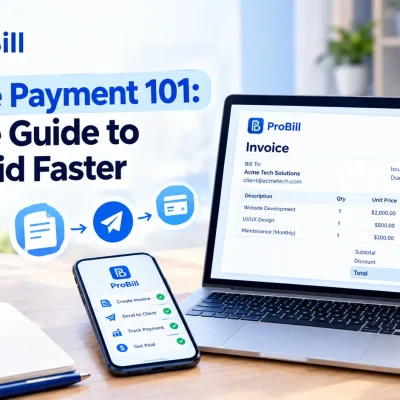
Automated workflows are the fastest way to turn any invoice payment terms example into real cash in the bank. Start by setting tiered email or SMS reminders in Create Invoice so the first nudge lands three days before the invoice due date, a second reminder fires on the due invoice day, and a friendly follow-up pings one week later. Each message pulls the exact wording of your invoice payment terms example from the system, eliminating manual copy-and-paste errors.
When reminders alone don’t work, flip on the automatic surcharge toggle. The platform inserts legally compliant language from our invoice late fee wording library and recalculates the balance without touching the original invoice payment terms example. This keeps the invoice payable terms consistent while protecting your margin.
Reward good behavior too. Build an early-pay rule—say “2 % if settled five days before due on invoice”—directly into the template. The discount line is auto-removed once the clock runs out, so you never honor an expired offer. All three features—reminders, penalties, incentives—live in the saved settings of the free invoice generator, meaning every future invoice payment terms example inherits the same precision. With zero human intervention, clients see clear invoice terms, act faster, and reduce the odds of an overdue invoice spiral.
Leveraging integrated payment options to shrink invoice due cycles
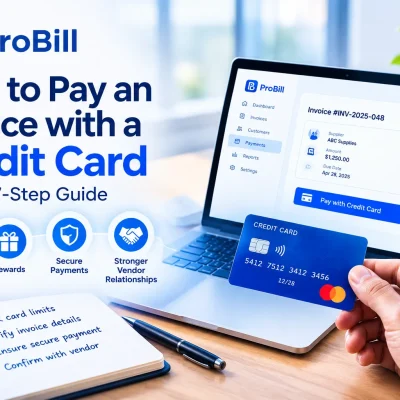
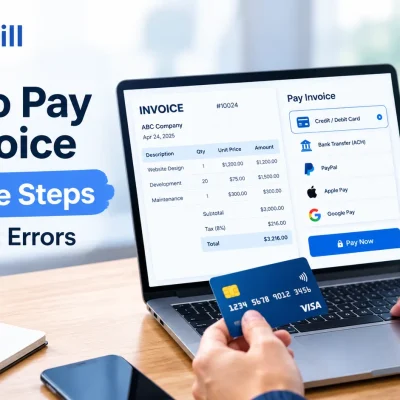
Even the most airtight invoice payment terms example stalls if the client can’t pay instantly. Embed secure pay-now buttons inside your PDF or digital bill using the payment gateway integration baked into our invoice templates. The button links to card, ACH, or wallet options, letting buyers fulfill the invoice due on receipt or invoice due upon receipt demand without leaving the page. Each completed transaction updates the status field inside your dashboard, so the next invoice payment terms example you issue reflects an accurate balance.
Don’t stop at buttons. Auto-populate banking details in the footer—see the compliance checklist in what to include on an invoice—to support wires for high-value projects. If you bill by sector, consult our invoice resources by industry to learn which rails clients prefer, then mirror those habits in every new invoice payment terms example.
Finally, sync the gateway’s “paid” timestamp to your accounting feed. This connection shortens reconciliation time and verifies that the terms of an invoice—whether Net, milestone, or invoice due language—were satisfied. For deeper setup guidance, review our invoice payment tutorial. By collapsing payment friction to a single click, you turn the strict wording of any invoice payment terms example into a friction-free path from “sent” to “paid.”
Frequently Asked Questions About Invoice Payment Terms
What does ‘invoice due upon receipt’ actually mean?
“Invoice due upon receipt” (also written as “invoice due on receipt”) tells the buyer that payment is expected immediately, with no grace period. Because the clock starts the moment the document is issued, many businesses pair this strict phrase with clear remittance details inside their invoice templates so clients can pay in one click. If you need to soften the tone, use “due on invoice” and add a courtesy 24-hour window, but keep the core invoice payment terms identical across every bill to avoid confusion.
Is Net 30 still the standard invoice payable term in 2026?
Net 30 remains the most common invoice payable terms benchmark, yet data in our invoice resources by industry show that 46 % of tech and creative firms now issue Net 15 or “invoice due” EOM to accelerate cash flow. Marketplaces, SaaS, and international contractors also favor shorter windows because digital fulfillment leaves little shipping delay to justify 30 days. In short, Net 30 is still “standard,” but it’s no longer the default invoice payment terms example for fast-moving sectors.
Can I charge interest if an invoice is past due?
Yes—most U.S. states allow 1 %–1.5 % monthly interest on an overdue invoice, provided the rate appears in writing before work starts (source: Investopedia). Spell out the percentage and reference jurisdictional caps in the same sentence as your late fee using the phrasing guide in our invoice late fee wording. Automatic calculations inside the free invoice generator ensure the penalty posts the moment the due invoice date passes, keeping collections compliant.
How do international currency fluctuations affect payment terms?
When billing across borders, exchange-rate swings can erode margins if your payment terms on invoice lock in a far-off settlement date. To hedge FX risk, many exporters quote in their home currency and shorten terms to Net 7, or they link the balance to the prevailing rate on the invoice due date—guidance covered in our invoice payment primer. Multi-currency support inside Create Invoice updates totals automatically, protecting you from volatile spreads.
What’s the difference between ‘due invoice’ and ‘overdue invoice’?
A “due invoice” is still within the contractual window—think Net 15 with seven days left—whereas an “overdue invoice” has passed its stated deadline and now triggers your penalty clause. Our guide to overdue invoices shows how to escalate once the terms of an invoice move from “due” to “past due,” including reminders, late fees, and collection options.
Where should payment terms appear on the invoice?
Best practice places the invoice terms directly beneath the total-due figure and repeats them in the footer next to banking details; this positioning tests highest for visibility in the what to include on an invoice checklist. If you’re using customizable invoice templates, bold both the Net window and the calendar date so clients can’t miss the invoice due language.
How can I negotiate better terms with long-standing clients?
Leverage performance data—on-time history, order volume, and referral value—to request shorter windows, early-pay discounts, or milestone triggers. Prepare a written addendum referencing your master invoice terms and conditions and demonstrate how quicker payments let you offer price freezes or priority service. Draft the proposal inside the free invoice generator so approved changes flow automatically into future invoice payment terms examples, keeping every relationship—and every terms of an invoice clause—both profitable and transparent.