Skip to content


Pay by Invoice Explained: What It Is and Why Businesses Use It
Definition and Core Principles of Payment by Invoice
When a seller agrees to deliver goods or services first and collect money later, that arrangement is called payment by invoice. In other words, what does pay by invoice mean? The buyer receives an itemized document—often created with tools like the Probill Invoice maker app, the web-based Create Invoice platform, or a free invoice generator—and settles the balance within agreed net payment terms such as Net 30 or Net 60.
Across global B2B commerce, this approach has become the default because it mirrors how supply chains function: production, delivery, and then B2B invoice payment. Companies rely on standardized invoice templates and tailored invoice resources by industry to maintain consistency, while buyers reference the seller’s invoice terms and conditions before approving payment.
Four core principles underpin modern pay by invoice terms:
- Delivery Confirmation: Goods or services must be accepted before the clock on the net terms starts.
- Clear Pay-By Date: Stated on the document and reinforced by resources like our guide to understanding invoice payment deadlines.
- Traceable Records: Digital ledgers and tools for tracking invoices and payments reduce disputes.
- Flexible Adjustments: If returns or price changes occur, sellers issue credit invoices and billing adjustments instead of canceling the original bill.
Because the buyer’s cash remains in their account until the due date, payment by invoice improves working capital for customers, while sellers gain larger orders and deeper relationships—provided they master how invoice payments work and outline common invoice payment terms such as early-payment discounts or late-fee policies.
Comparing Pay by Invoice to Up-Front Payments and Credit Cards
Companies often weigh pay-by-invoice against up-front bank transfers and credit card payments, two very different invoice payment methods. The table below highlights the practical differences:
| Aspect | Pay by Invoice | Up-Front Payment | Credit Card |
|---|---|---|---|
| Buyer Cash Flow | Preserved until net terms expire | Funds leave account immediately | Up to 30–55 days float depending on card cycle |
| Seller Cash Flow | Delayed; may require financing | Immediate | 1–2 days after processor settlement |
| Processing Fees | Usually none | Bank wire fees only | 1.5 %–3 % card fees cut into margin |
| Risk of Non-Payment | Medium; mitigated with credit checks | Low; paid before delivery | Low; processor assumes chargeback risk |
| Administrative Load | High: issue, send, chase invoices | Low during sale, none after | Moderate: reconciliation and chargeback handling |
| Negotiation Leverage | Strong for buyer (longer terms) | Strong for seller (pre-payment) | Balanced: card networks set standard protections |
For many B2B firms, payment by invoice strikes the preferred balance: it nurtures long-term partnerships and larger deal sizes without imposing card fees or forcing buyers to pre-pay.
How Pay by Invoice Works: A Step-by-Step Walk-Through
Setting Net Payment Terms and Credit Limits
Before the first product ships, seller and buyer agree on net payment terms—for example Net 30 or Net 60—that define when funds must clear the seller’s account. These conditions, alongside any early-pay discounts or late-fee clauses, are usually selected from a menu of common invoice payment terms and then embedded in the contract or purchase order.
Next, the seller performs a credit assessment to determine how much open balance the buyer can carry at any moment. This credit limit protects cash flow while still offering the flexibility that makes payment by invoice attractive in B2B trade. If the buyer wants longer terms or a higher ceiling later, the parties revisit the limit rather than rewriting the entire agreement.
All details—due dates, dispute windows, accepted currencies, and even alternative options from different invoice payment methods—are summarized in formal invoice terms and conditions. Clear documentation keeps both sides aligned on pay by invoice terms and minimizes confusion about what does pay by invoice mean once invoices start flowing.
The Invoice Lifecycle: From Issue to Reconciliation
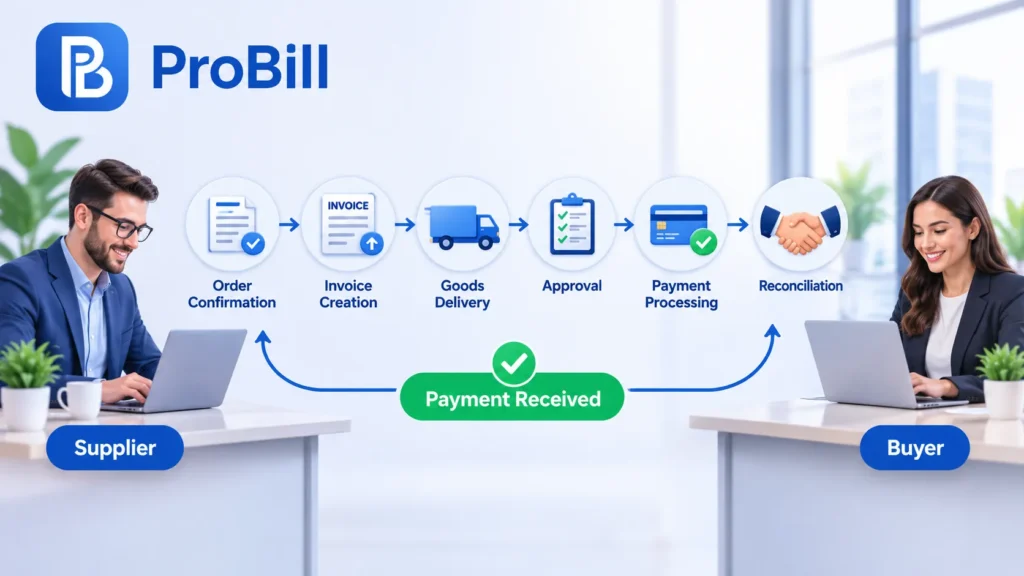
Draft the invoice
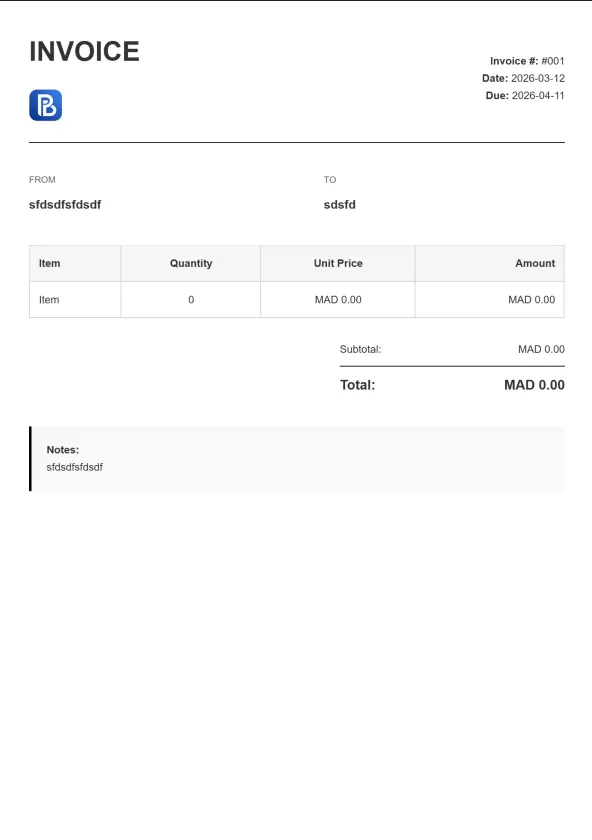
Sellers generate a bill using tools such as the Probill Invoice maker app, the web-based Create Invoice platform, or a free invoice generator. Pre-built invoice templates and industry-specific layouts from invoice resources by industry ensure every required field—buyer reference, tax ID, net terms, and credit limit—is present.Send and confirm receipt
The finalized document is emailed or uploaded to the buyer’s portal. Automated acknowledgments provide proof of delivery and start the countdown defined by the net terms.Record key deadlines
Both parties log the due date and any milestone dates (partial deliveries, inspection periods). Our guide to understanding invoice payment deadlines explains how to calculate these correctly to avoid disputes.Deliver goods or services
Shipment, installation, or service completion occurs. Acceptance triggers the buyer’s internal approval workflow, moving the invoice into their accounts-payable queue for B2B invoice payment.Monitor open balances
Throughout the term, sellers use dashboards for tracking invoices and payments so they can send reminders or statements before the due date without manual spreadsheet work.Handle adjustments or returns
If pricing changes, quantities shift, or items are returned, the seller issues credit invoices and billing adjustments that reference the original document number, keeping the audit trail intact.Collect funds and reconcile
On or before the due date, the buyer initiates the transfer according to how invoice payments work. The seller applies the payment, closes the receivable, and frees the buyer’s credit limit for the next order—completing the cycle of pay by invoice meaning in practice.
Benefits and Risks of B2B Invoice Payment for Buyers and Sellers
Cash-Flow Advantages and Negotiation Leverage for Buyers
Because the buyer’s funds stay on hand until the net payment terms expire, payment by invoice frees capital for inventory turns, market expansion, or simply earning interest. Large procurement departments often model the impact: every extra 15 days of float on a $1 million order can keep roughly $41,000 available (assuming a 10 % annual cost of capital).
Beyond liquidity, buyers gain negotiation leverage. When sellers know the customer will settle reliably, they are more willing to:
* Lengthen net terms from 30 to 60 days.
* Offer early-pay discounts (e.g., 2 % / 10 Net 30) that lower the final price.
* Bundle services—installation, training, or spare parts—into the same invoice.
Savvy finance teams compare these concessions with different invoice payment methods to decide whether the discount beats card rewards or wire speed. They also document every agreement inside invoice terms and conditions so that accounts-payable staff can comply without renegotiating later.
However, buyers do assume administrative overhead. Missing a due date triggers late fees spelled out in common invoice payment terms and may damage supplier relationships. Automated calendar alerts or AP software linked to understanding invoice payment deadlines help prevent these avoidable costs.
Risk-Mitigation Tactics Every Seller Should Implement
For sellers, the upside of larger orders must be balanced against credit and collection risk. Implementing the tactics below protects cash flow without abandoning the pay by invoice terms that attract B2B customers:

- Perform upfront credit checks and set conservative limits. Adjust ceilings as on-time history grows, or reduce them after late payments.
- Embed clear penalties, early-payment incentives, and dispute windows in invoice templates generated with the Probill Invoice maker app or Create Invoice. Consistent language avoids ambiguity over what does pay by invoice mean in each contract.
- Monitor outstanding balances daily with tracking invoices and payments dashboards. Automated reminders 5–7 days before the due date cut average days-sales-outstanding (DSO) without straining relationships.
- Offer structured early-pay discounts or leverage invoice-financing when large receivables threaten liquidity. Understanding how invoice payments work helps decide when factoring costs less than an overdraft.
- Handle returns and pricing changes through formal credit invoices and billing adjustments instead of canceling the original bill. This preserves the audit trail required by auditors and trade-credit insurers.
By weaving these safeguards into everyday operations, sellers can embrace B2B invoice payment confidently, turning delayed cash collection from a vulnerability into a competitive advantage.
Implementing Pay by Invoice: Essential Tools, Policies, and Best Practices
Choosing Software to Automate B2B Invoice Payment
Reliable automation tools eliminate manual data entry, reduce errors, and accelerate every stage of B2B invoice payment. When comparing options, focus on integration depth, workflow triggers, and scalability rather than surface-level features.
| Software Type | Ideal For | Key Automation Features | Example Tools |
|---|---|---|---|
| Lightweight invoice generators | Freelancers and small vendors that only need to create and send bills | Drag-and-drop fields, PDF export, instant email delivery | free invoice generator |
| Cloud invoicing platforms | SMEs that want recurring billing, reminders, and payment portals without a full ERP | Auto-numbering, recurring templates, customer-side dashboards, online payment links | Create Invoice, Probill Invoice maker app |
| AR automation or ERP add-ons | Mid-market and enterprise firms processing thousands of invoices per month | Two-way ERP sync, rule-based dunning, cash-application matching, predictive DSO analytics | NetSuite AR, SAP FI plugins, HighRadius (third-party) |
Once you shortlist a tool, follow this rollout sequence:
- Map current receivables workflows and identify bottlenecks (e.g., late approvals, missing PO numbers).
- Configure invoice templates with mandatory fields and branding, then upload industry-specific layouts from the invoice resources by industry library.
- Sync customer, product, and tax data with your accounting system to avoid duplicate records.
- Set automated reminders that reference the agreed net payment terms; link them to dashboards for tracking invoices and payments.
- Test end-to-end by sending a pilot invoice to an internal account payable address, confirming that the buyer can follow the steps described in how invoice payments work.
- Go live, monitor days-sales-outstanding, and refine rules without changing the underlying pay by invoice meaning for customers.
A well-chosen system handles routine chasers and allocations, freeing finance teams to focus on higher-value credit decisions rather than wondering what does pay by invoice mean in each individual contract.
Drafting Clear Pay by Invoice Terms to Avoid Disputes
Ambiguous language—not bad intent—causes most invoice disputes. Embedding precise, plain-English clauses in your invoice terms and conditions prevents confusion and sets enforceable expectations.
- State the specific net payment terms (e.g., “Net 30 calendar days from delivery acceptance”) and reference any early-pay discounts listed in the common invoice payment terms directory.
- Define acceptable invoice payment methods (ACH, SEPA, wire) and a fallback option from the different invoice payment methods guide to avoid last-minute method changes.
- Include a dispute window (typically 7–10 days) that requires written notice; after the window closes, the full amount becomes payable even if minor issues surface.
- Spell out late-fee calculations—fixed charge or daily interest—and tie them to the statutory rate in the buyer’s jurisdiction if applicable.
- Document conditions for issuing credit invoices and billing adjustments so that both parties know when a partial reversal, rather than a full cancellation, applies.
- Reference any credit limits, review cycles, or collateral requirements, clarifying that exceeding the limit suspends future shipments until outstanding B2B invoice payment is received.
- Conclude with governing law and venue clauses to streamline formal collection actions if the buyer repeatedly ignores the pay by invoice terms.
By codifying these points, you transform broad promises into enforceable policies, cutting resolution time when disagreements arise and reinforcing professional payment by invoice relationships.
Frequently Asked Questions About Pay by Invoice
Is pay by invoice the same as net 30?
Not exactly. Pay by invoice describes the overall process of delivering goods or services first and collecting later, while Net 30 is just one of many possible net payment terms that specify the due date. You can review other options—like Net 15, Net 60, or early‐pay discounts—in our directory of common invoice payment terms and see how the timing affects cash flow in the guide to how invoice payments work.
How do I qualify customers for invoice payment terms?
Start with a credit check and trade references, then set conservative limits before expanding. Formalize approval criteria inside your invoice terms and conditions and monitor exposure in real-time using a tracking invoices and payments dashboard so you can adjust limits quickly if risk changes.
What happens if a client misses the due date?
Your late-fee policy—referenced on the invoice—kicks in once the grace period defined by the due date passes. Automated reminders from an A/R tool, backed by the guidelines in understanding invoice payment deadlines, usually resolve most delays; if disputes arise, issue partial reversals through credit invoices and billing adjustments instead of canceling the entire bill.
Can international transactions use pay by invoice?
Yes, but you’ll need multi-currency invoice templates and tax compliance wording tailored to each market. Many exporters pair pay-by-invoice with hedged ACH, SEPA, or SWIFT wires—just one option among the different invoice payment methods—and consult the library of invoice resources by industry to match regional norms.
Are there fees associated with payment by invoice platforms?
Most platforms charge either a subscription or a small per-invoice fee, which is usually lower than credit-card processing costs. Entry-level tools like the free invoice generator cost nothing, while advanced apps such as the Probill Invoice maker app or cloud suites like Create Invoice bundle automation features into tiered plans.
How do I switch existing clients to pay by invoice?
Notify customers in writing, attach updated invoice terms and conditions, and outline the practical steps so they understand what does pay by invoice mean for their A/P workflow. Providing a sample document created with your new system and linking them to the explainer on how invoice payments work eases the transition and reduces objections.