Skip to content

Invoice Payment 101: Definition, Meaning & Why It Matters
What is an invoice payment? A clear definition for businesses and freelancers
An invoice payment is the transfer of funds a customer makes to settle a specific bill issued by a seller—nothing more, nothing less. Unlike a generic purchase receipt, the invoice lists delivered goods or services, the due amount, and the agreed Invoice Payment Terms such as net-30 or immediate settlement. Once the amount is received, the document becomes a Paid Invoice and should be archived for compliance and tax purposes.
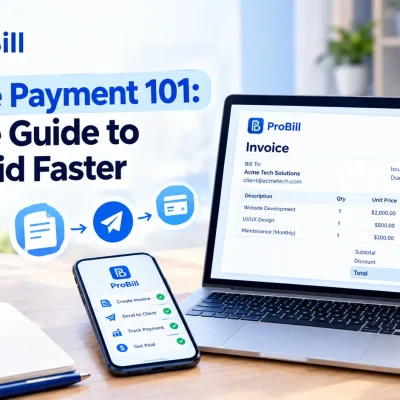
For entrepreneurs and freelancers, the invoice and payment workflow starts with creating a professional document. You can draft one manually, use ready-made Invoice Templates, or speed things up with a Free Invoice Generator inside the Create Invoice platform. After sending the bill, track the status until the client is paying invoice in full. If questions arise about how to pay an invoice, direct customers to your accepted methods and provide a link to a concise FAQ such as How to Pay an Invoice.
The cycle ends when the customer’s bank confirms the credit, the seller marks the invoice paid, and both parties record the transaction as paid invoices for bookkeeping. If the due date passes without settlement, the document shifts to the Overdue Invoices category, triggering follow-up actions or late fees.
Invoice payment meaning in today’s digital economy: key takeaways
In a cloud-first marketplace, invoice payment meaning extends beyond the simple transfer of cash; it now signals trust, data accuracy, and automated reconciliation. Digital-first buyers often prefer card, ACH, or wallet options over traditional payment by invoice via paper check. Offering multiple Invoice Payment Methods therefore shortens the time between invoice and payment and improves cash flow.
For sellers, instant confirmation of invoice payments allows real-time reporting, easier matching of line items, and automatic nudges when clients miss a deadline—features built into many modern accounting tools. Industries ranging from construction to SaaS rely on specialized guidance; our Invoice Resources by Industry show why what is invoice payment varies by sector but the goal—fast, accurate settlement—remains identical.
The shift to online workflows also clarifies pay by invoice meaning: buyers receive the goods or services first, then paying invoice through a secure portal or link. As soon as funds clear, the seller marks the file as a paid invoice, closes the ledger entry, and leverages the data for forecasts. In short, understanding what is an invoice payment and optimizing each step directly impact liquidity, creditworthiness, and long-term growth.
From Invoice to Cash: The Step-by-Step Process to Get Paid Faster
Reducing the gap between issuing and receiving cash hinges on a repeatable workflow. High-velocity invoice payments start with an airtight document, continue with crystal-clear terms, and end with proactive nudges that keep cash moving. The following two phases show exactly how to tighten every link in your invoice and payment chain.
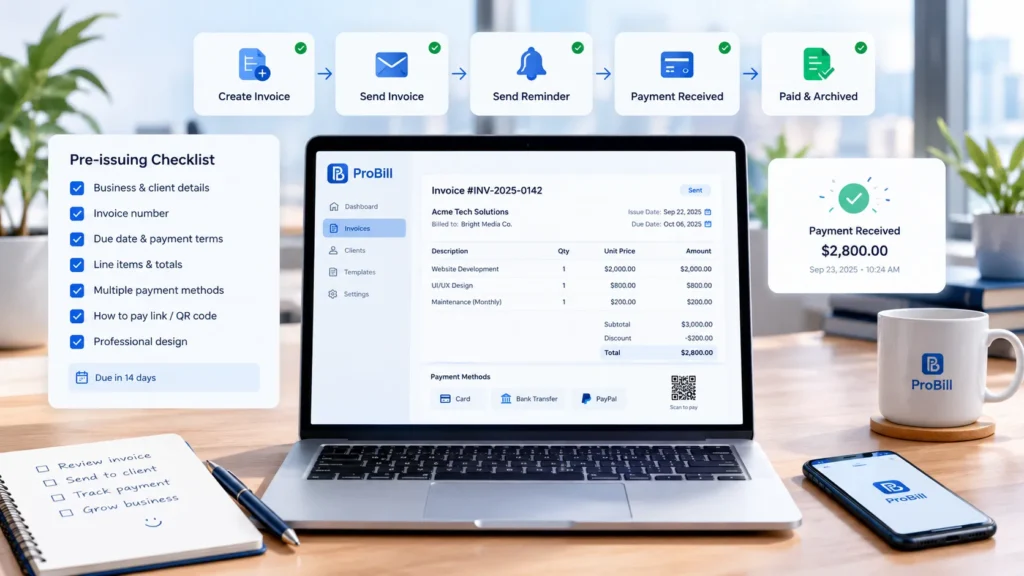
Pre-issuing checklist: essential details every invoice needs to avoid delays
A flawless bill stops questions before they arise and accelerates invoice payments. Run through this quick checklist before you hit “send”:
Legal identifiers
• Verified business name, tax ID, and accurate client info—mismatches stall payment by invoice systems.
• Sequential invoice number for easy tracking inside your accounting suite.Crystal-clear due date and invoice payment terms
• Net-7 or net-30 is common, but shorter cycles push faster invoice payments.
• Spell out late-fee percentages to deter overdue invoices later.Line-item transparency
• Item description, units, rate, and subtotal remove any doubt about what is invoice payment covering.
• Include discounts or deposits to align invoice paid totals with quotes.Multiple invoice payment methods
• Card, ACH, wallet, or “paying invoice with PayPal” links reduce friction.
• Add a QR code from the free invoice generator so mobile users settle instantly.Friendly guidance link
• Drop a short URL to your “how to pay an invoice” FAQ to answer last-minute doubts.Professional design
• Use branded invoice templates or the automation inside Create Invoice to eliminate formatting errors that slow invoice payments.Industry-specific extras
• Attach permits, timesheets, or milestone approvals where required; see our invoice resources by industry for sector norms.
By ticking every box, you minimize “what is an invoice payment for?” emails and keep the focus on prompt settlement. Well-prepared documents routinely convert to paid invoices within days.
Proven follow-up timeline: reminders that convert unpaid invoices into paid invoices
Even the best paperwork may encounter silence. Use this timeline to keep invoice payments flowing without damaging client relationships:
Day 1: Automated receipt
A polite confirmation thanks the client for the order and restates the due date. Linking the original document reinforces invoice payment meaning and cuts disputes.Day 7: Friendly nudge
Re-email the invoice with a one-click “Settle Now” button. Mention that early invoice payments secure uninterrupted service.Day 3 before due date: Anticipatory reminder
Highlight preferred payment by invoice options and note that the account will show as invoice paid on receipt. This pre-due alert lifts on-time rates by up to 11% (source: QuickBooks).Day 1 after due: First overdue alert
Reference the agreed terms and attach the ledger entry so the client sees what is invoice payment outstanding. Offer to walk them through pay by invoice meaning via phone if needed.Day 7 after due: Late-fee notice
Trigger the surcharge you outlined earlier. The extra cost often converts lingering invoice payments quickly.Day 30 after due: Final notice + escalation
Mark the bill as overdue invoices internally and state that collection procedures will begin. Keep communication professional; once settled, update records to reflect a paid invoice and archive with other paid invoices.
Embedding this cadence inside your accounting tool—or the workflow engine in Create Invoice—keeps invoice and payment data synchronized. Consistent follow-ups answer “what is invoice payment status?” before clients even ask, maintain cash predictability, and ensure your last interaction is a confirmation of invoice payments received.
Top Methods for Paying Invoices: Choosing the Best Option for Your Business
Selecting the right channel for invoice payments can slash processing costs, speed up reconciliation, and strengthen client loyalty. Below, we weigh the leading options so you can match each customer profile to the most efficient route. For broader context, check our detailed guide to diverse invoice payment methods.

Payment by invoice vs. credit card, ACH, and digital wallets: pros and cons
Consistent, friction-free invoice payments hinge on pairing each job’s risk, ticket size, and urgency with an appropriate rail. Use the comparison table, then the quick notes that follow, to decide where every invoice and payment should land.
| Method | Settlement speed | Typical fee | Cash-flow effect | Best use case |
|---|---|---|---|---|
| Payment by invoice (net terms) | 15–60 days | 0–1% (early-pay discounts) | Deferred inflow; lets buyers hold cash longer | B2B orders requiring approval workflows |
| Credit card | Same day | 2.5%–3.5% + $0.10 (source: Federal Reserve) | Immediate funds; fees trim margin | Online services, low-ticket B2C |
| ACH bank transfer | 1–2 days | $0.20–$1.50 flat (source: NACHA) | Predictable inflow at minimal cost | Recurring retainers, high-value invoices |
| Digital wallets (PayPal, Apple Pay) | Instant | 2.9% + $0.30 | Fast funding; easy mobile checkout | International freelancers, micro-transactions |
Key takeaways for your invoice and payment strategy:
1. Payment by invoice keeps paperwork simple—send a bill generated in seconds with the free invoice generator—but you shoulder the credit risk until the invoice paid status posts.
2. Card and wallet rails drive 32% higher on-time ratios (Statista) because customers can settle while reviewing digital invoice templates.
3. ACH is the cost darling; integrate it directly inside Create Invoice to auto-match remittances and mark each paid invoice in real time.
4. Mix methods—embed a card link plus ACH instructions—to cut overdue invoices across diverse buyer personas.
Pay by invoice meaning for buyers: how it affects cash flow and supplier relations
Invoice payments on net terms let buyers receive goods today and release cash tomorrow. This “pay by invoice meaning” revolves around leveraging supplier credit instead of bank credit. Here’s how it plays out:
• Cash-flow buffer: Buyers keep liquidity for payroll or inventory turns while the seller waits for payment. Aligning generous invoice payment terms with seasonal sales spikes preserves working capital without extra loans.
• Relationship equity: Reliable paying invoice behavior—settling on or before due dates—earns volume discounts and preferred production slots. Suppliers track every paid invoices record as a trust signal.
• Risk of complacency: Stretching terms beyond 45 days drags the seller’s DSO and can sour relations. If reminders escalate to overdue invoices, the privilege may be revoked.
To stay in the green:
1. Map incoming and outgoing cash weekly, factoring in every expected invoice payments outflow.
2. Schedule automated ACH pushes through your bank portal so each invoice paid confirmation reaches the vendor before the grace period lapses.
3. If a crunch looms, communicate early—link the vendor to the self-service how to pay an invoice page for partial settlements that still mark progress.
When buyers respect the credit window, suppliers enjoy forecastable revenue while buyers unlock interest-free capital—illustrating why understanding what is invoice payment etiquette is as strategic as any financing line. Access sector-specific norms in our invoice resources by industry to fine-tune terms that keep partnerships thriving.
Best Practices to Prevent Late or Unpaid Invoices
Setting crystal-clear payment terms: templates and wording that work
Loose language is the #1 reason invoice payments stall, so spell everything out before work begins. Start with an airtight clause in your document—our invoice payment terms guide shows the exact net-15, net-30, or “due on receipt” phrases that buyers understand. If you’re new, load a ready-made layout from the invoice templates library or build one in seconds with the free invoice generator inside Create Invoice. Using a template guarantees each section—scope, cost, schedule, and accepted rails—appears in the same place every time, making invoice payments almost automatic.
- Put the due date in bold on the top third of the page; never hide it in footnotes.
- Add a single sentence that ties delivery to settlement: “Ownership transfers once the invoice paid confirmation is received.”
- List every approved rail—ACH, card, wallet—and link to your invoice payment methods page so clients choose the fastest option.
Close with a human touch: a one-line “thanks for your business” followed by a link to “how to pay an invoice” for easy self-service. This structure answers what is an invoice payment in plain English, clarifies pay by invoice meaning for B2B buyers, and reduces back-and-forth emails that delay invoice payments. The Small Business Administration also recommends reinforcing terms in writing to avoid disputes (source: SBA). Follow these steps and you’ll shift more files from “sent” to invoice paid status in record time while building a repeatable invoice and payment rhythm.
Leveraging incentives and penalties: turn invoice payments into a predictable stream
Even flawless wording can’t eliminate every late payer, so layer carrots and sticks that steer invoice payments toward the due date. Offer a 1%–2% discount for clients paying invoice within ten days; the minor margin trade-off often beats waiting 45 days for cash and aligns with standard payment by invoice etiquette. On the flip side, disclose a late-fee schedule—typically 1.5% per month—and reference your overdue invoices policy right on the PDF. Transparent consequences give buyers a clear choice: save money now or incur cost later.
• Early-pay perks: pair the discount with loyalty bonuses—future upgrades, priority scheduling, or access to exclusive invoice resources by industry. Clients see immediate value, and you lock in predictable invoice payments.
• Soft reminders: schedule escalating nudges through the automation inside Create Invoice so every outstanding balance moves steadily toward a paid invoice.
• Firm penalties: once the grace period lapses, apply the surcharge automatically and restate that accounts move to collections after 30 days. Consistency reinforces what is invoice payment responsibility without harming the relationship.
These tactics satisfy invoice payment meaning for both parties: buyers gain choice, sellers gain certainty. Over time you’ll see fewer outstanding lines, more paid invoices in your ledger, and a healthier cash-conversion cycle that clarifies exactly what is invoice payment success.
Invoice and Payment FAQs
How long do clients legally have to pay an invoice?
Most countries leave the due date to the contract, so clearly written invoice payment terms are your first line of defense. If the agreement is silent, U.S. courts usually expect invoice payments “within a reasonable time,” while the U.K.’s Late Payment of Commercial Debts Act defaults to 30 days after delivery (source: gov.uk). Because the law only fills gaps, always put the deadline in writing to keep every invoice and payment dispute-free.
Can I charge interest on overdue invoice payments?
Yes—provided the customer agreed to the surcharge before work began. Most small businesses add 1%–1.5% per month, the cap many states allow, and reference their overdue invoices policy when the clock starts. Without a prior clause you can still seek statutory interest—8% above the Bank of England base rate in the U.K., for example—but written consent turns late fees into predictable cash rather than courtroom drama.
What should I do if a client refuses to pay an invoice?
First, double-check the figures, attach proof of delivery, and send a concise reminder that includes a link to your how to pay an invoice guide. If silence persists, escalate through the automated dunning inside Create Invoice and outline the cost of collections. Still no movement? File in small-claims court or hire a licensed agency; both options convert stubborn invoice and payment stand-offs into enforceable judgments. Each step documents that you acted in good faith while pursuing lawful payment by invoice.
Is a receipt the same as a paid invoice?
No. A receipt merely acknowledges money received, while a paid invoices file shows the original bill plus settlement details—date, method, and confirmation number. Only the latter proves the entire transaction cycle, which auditors require to verify what is invoice payment for tax and compliance purposes. Always issue the receipt but archive the paid invoice for seven years or your local mandate, whichever is longer.
How do partial payments affect the status of an invoice?
A partial credit keeps the balance open, so your accounting tool should mark the document “partially paid” until the final amount posts. State this option in your invoice payment methods section so clients know how paying invoice in installments works. Once the last dollar lands, update the record to invoice paid, close the ledger entry, and send a zero-balance statement confirming pay by invoice meaning is now fulfilled.
What records should I keep once an invoice is paid?
Retain the PDF or paper original, proof of funds, and any related contracts. Storing them with standardized invoice templates or a link generated by the free invoice generator simplifies audits and future cash-flow forecasting. Keep backup copies—local and cloud—for every paid invoice so you can trace invoice payment meaning across years, industries, and tax jurisdictions.
Are digital signatures valid on invoices?
In most regions—including the U.S. (ESIGN Act) and EU (eIDAS Regulation)—electronic signatures carry the same legal weight as ink, provided you can show signer identity and intent. Modern tools let you embed a signature block directly into invoices, and our invoice resources by industry outline any sector-specific tweaks. Using e-signatures streamlines invoice payments by removing mailing delays while preserving a verifiable audit trail for what is an invoice payment today.
How Our Solution Streamlines Invoice Payments & Boosts Your Cash Flow
Tired of chasing invoice payments? The Create Invoice platform removes the bottlenecks that strangle liquidity by automating every step between “send” and “invoice paid.” Smart templates pull client data and your preferred invoice payment terms into a branded PDF, while built-in rails let customers choose the fastest invoice payment methods without leaving the email. The result is a tighter invoice and payment loop, fewer overdue invoices, and visibility that turns static files into real-time cash-flow signals.
Because the engine updates the ledger the second money lands, you always know which bills are pending, partially settled, or fully signed off as paid invoices. That clarity speeds decisions—whether you’re extending fresh credit, restocking inventory, or planning tax estimates—by showing exactly what is invoice payment status right now, not next week.
Automated reminders, one-click payment links, and real-time tracking: inside the platform
Reminders that write themselves
• Schedule gentle nudges the moment you hit “send.” If the due date lapses, the tone shifts automatically and references your overdue invoices policy, so every client knows the stakes without manual follow-up.One-click settlement
• Each email embeds a secure “Pay Now” button. Clients tap, select ACH, card, or wallet, and the system records the invoice payments instantly. A sidebar link to how to pay an invoice answers last-minute questions and eliminates friction for buyers still learning the ropes of pay by invoice meaning.Live status dashboard
• Color-coded tiles show when a document shifts from “sent” to “partial” to paid invoice, letting you match cash forecasts to reality. Drill down to view the original PDF, created with either the drag-and-drop invoice templates or the free invoice generator, and confirm invoice payment meaning line by line.
Together, these features keep invoice payments flowing at 2× the speed of manual chasing, freeing founders to build rather than babysit receivables.
Case study spotlight: 30% faster payment cycles for a growing agency
A creative agency in Austin migrated its quoting and billing to Create Invoice after stretching payroll to cover 45-day terms. By leveraging automated reminders and the one-click link, the team cut average settlement from 27 to 19 days—an internal audit marked a 30% acceleration in cash conversion.
Key moves:
• Swapped static PDFs for dynamic templates tied to industry presets in our invoice resources by industry, reducing prep time to five minutes.
• Enabled clients to choose “payment by invoice” or card on a single screen, satisfying long-time B2B buyers while giving new startups the speed they expect when paying invoice online.
• Fed real-time data into forecasting, allowing the CFO to commit to early-pay supplier discounts—proof that faster invoice payments don’t just shore up working capital; they unlock strategic savings.
The agency now treats “what is an invoice payment” as a solved problem: every bill is tracked, every dollar is transparent, and invoice payments land in the bank before creativity ever slows.