Skip to content


Why Modern Businesses Need Robust Invoice Management Solutions
Today’s CFOs and operations leaders treat a modern invoice management solution as core infrastructure, not a back-office luxury. The right platform scales with transaction volume, integrates with ERP stacks, and—crucially—keeps cash flowing without manual fire drills.
The Hidden Costs of Manual Invoice Handling
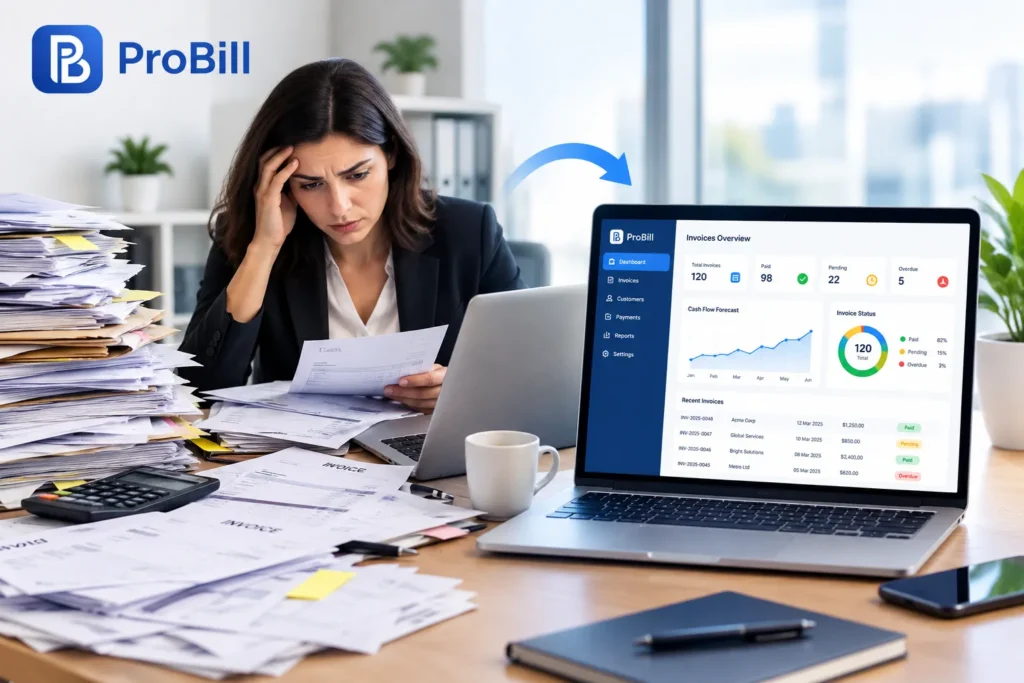
Paper-driven approval chains may look “free,” yet they drain resources in ways that rarely show up on the balance sheet.
1. Labor drag: AP teams spend up to 17 minutes keying and routing a single paper invoice (Ardent Partners, 2022). Multiply that by thousands, and payroll balloons fast.
2. Error remediation: Fat-fingered amounts or misfiled documents spawn downstream rework, late fees, and strained vendor relationships—costs that a smart invoice management solution prevents at the point of capture.
3. Lost visibility: Without searchable audit trails, finance leaders rely on gut feel instead of data-backed cash-flow forecasts.
4. Security exposure: Physical files and emailed PDFs expose confidential data; role-based controls inside leading invoice management systems lock access down to authorized users.
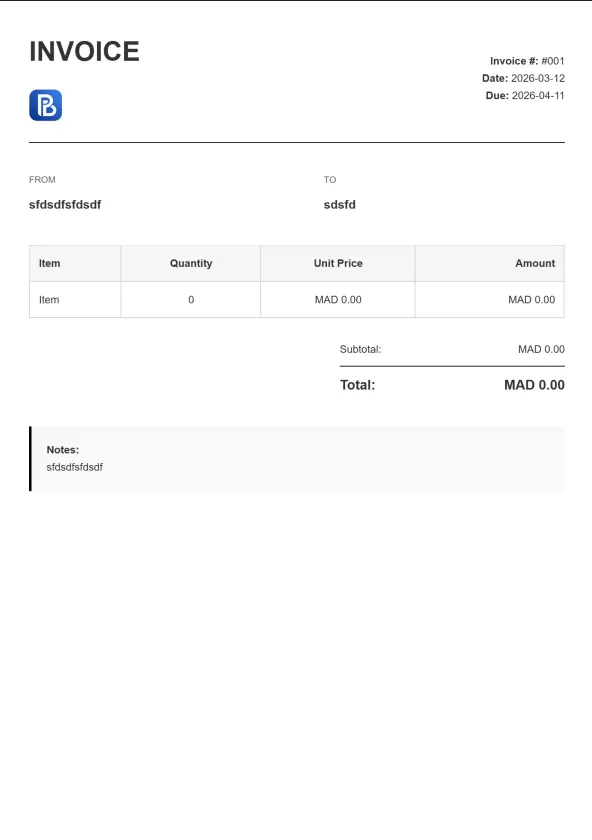
Automated tools such as the free invoice generator at Create Invoice or the Probill invoice maker mobile app and ready-made invoice templates illustrate how digital workflows slash these hidden expenses before the first bill is even approved.
Compliance, Accuracy, and Speed: The Triple Advantage
Regulators, auditors, and trading partners all demand clean data delivered fast. A cloud based invoicing engine raises the bar on three fronts:
• Compliance: Built-in tax rules, country-specific e-invoicing mandates, and timestamped logs mean your invoice management solution stays audit-ready without spreadsheet gymnastics. For sector-specific guidelines, explore our curated invoice resources by industry.
• Accuracy: Optical character recognition (OCR) paired with an AI-driven invoice manager extracts and validates line-item details in seconds, eliminating keystroke errors that previously triggered costly supplier disputes.
• Speed: Automated two- or three-way matching, instant exception alerts, and mobile approvals compress cycle times from weeks to days. The result is early-payment discounts captured instead of forfeited—and a healthier working-capital position.
Because the data resides in secure, scalable clouds, finance chiefs can Create Invoice drafts, review payment status, and authorize releases from any device, anywhere. That level of agility is only possible when invoice management, procurement, and treasury operate on a single, integrated invoice management solution.
Key Features to Look for in an Invoice Management System
Modern invoice management systems do far more than store PDFs. The best platforms weave compliance, speed, and insight directly into your finance stack, turning every invoice into clean data you can act on. When you evaluate an invoice management system, zero-in on the capabilities below—each one separates a basic repository from a future-proof invoice management solution.
Automated Workflows & Approval Chains
Manual routing is the bottleneck most likely to stall cash flow, so confirm that the invoice management system you shortlist offers built-in automation you can tailor without coding.
- Drag-and-drop workflow designer: Map multi-department approval chains in minutes, then reuse them across your invoice templates for instant consistency.
- Role-based routing: The invoice manager should automatically send high-value invoices to senior approvers while routine spend flows to departmental leads, protecting internal controls.
- Intelligent exception handling: Look for AI-driven matching rules that flag duplicates, tax errors, or policy breaches and escalate them to the right stakeholder—no email chase needed.
- Mobile and email approvals: Executives can clear payments straight from their phone or a secure email link, shaving days off cycle time.
- End-to-end audit trail: Every keystroke, comment, and timestamp stays immutable inside the cloud based invoicing engine, making audits nearly self-service.
If your team already captures bills with the free invoice generator or drafts in Create Invoice, the workflow layer should pull those records in automatically, guaranteeing one uninterrupted data thread from creation to payment.
Real-Time Analytics and Reporting Dashboards

A finance leader can’t improve what they can’t measure, which is why real-time insight is a non-negotiable feature of any serious invoice management system.
• Live AP KPIs: Track days payable outstanding, early-payment discounts captured, and exception rates on an always-updating dashboard—no spreadsheet refreshes.
• Cash-flow forecasting: Advanced invoice management solutions aggregate approval status and payment terms to predict outgoing cash needs weeks ahead.
• Drill-down analytics: Click from a company-wide trend to a single PDF without leaving the dashboard, empowering the invoice manager to resolve issues instantly.
• AI-powered anomaly detection: Cloud based invoicing platforms, such as those highlighted in Gartner’s finance digitalization reports, surface outliers in vendor pricing or tax coding before they hit your ledger.
• Industry-specific views: Finance teams in healthcare, construction, or SaaS can import best-practice widgets from our invoice resources by industry and see metrics that matter to regulators and investors alike.
Data gathered at capture—whether through automated OCR or pre-formatted invoice templates—flows into these dashboards within seconds, giving stakeholders the agility to pivot procurement plans and negotiate vendor terms in real time. Robust analytics turn static invoice management into a strategic lever that shapes every budget conversation.
Cloud-Based Invoicing vs. On-Premise: What Delivers Better ROI?
Security, Scalability, and Remote Access Benefits
Cloud based invoicing gives finance teams defenses that on-premise racks rarely match. Reputable vendors encrypt data in transit and at rest, monitor environments 24/7, and roll out security patches instantly—controls that most internal IT teams can’t replicate at scale. Gartner notes that continuous patching is one of the primary reasons cloud ERP workloads suffer fewer breaches than server-room peers (source: gartner.com).
Because resources auto-scale, invoice management systems in the cloud absorb sudden spikes in invoice volume without new hardware or weekend outages. An invoice manager simply adjusts user seats or API calls in the admin panel and capacity appears in minutes.
Remote access is now table stakes. With cloud based invoicing, controllers approve payments from a phone on the tarmac, and auditors retrieve copies from any timezone without VPN hurdles. That agility surfaces in every sector: the healthcare templates inside our invoice resources by industry show how multi-location providers keep PHI secure while granting field staff real-time visibility.
Tight integrations deepen the value. Cloud platforms pull PO data created in Create Invoice, attach supporting docs generated with the free invoice generator, and pre-fill line items from saved invoice templates—no file shuttling or duplicate logins. The result is a unified invoice management solution that keeps IT footprints lean while elevating security, scalability, and mobility.
Total Cost of Ownership Comparison
When boards ask which deployment delivers better ROI, a clear-eyed TCO comparison settles the debate:
| Cost Component | Cloud-Based Invoicing | On-Premise |
|---|---|---|
| Licensing | Subscription aligns costs to usage; no capital depreciation. | Large upfront license plus annual maintenance. |
| Infrastructure | Vendor hosts on elastic IaaS, eliminating servers, storage, and data-center overhead. | Buyer funds hardware, power, cooling, and redundancy. |
| Upgrades & Support | Included; pushed automatically with no downtime windows. | IT schedules, tests, and installs patches—often at overtime rates. |
| IT Staffing | Lean staff configures workflows; vendor handles uptime SLAs. | Full team maintains OS, databases, backups, and security. |
| Innovation Pace | Continuous delivery releases AI features (e.g., OCR enhancements). | Features arrive only after major version purchases. |
Cloud based invoicing slashes hidden costs like disaster recovery, audit prep, and scalability projects. IDC research shows cloud ERP models lower five-year operational spend by up to 30% versus on-premise (source: idc.com), savings that compound when applied to invoice management.
An agile invoice management solution also captures financial upside: faster cycles free cash for investment, and accurate data positions the invoice manager to negotiate volume discounts. When these soft gains join hard savings, cloud based invoicing routinely delivers the superior return on investment for modern invoice management systems.
How to Successfully Implement an Invoice Manager in Your Organization
Rolling out an invoice manager is less about flicking a software switch and more about orchestrating people, data, and processes so that finance gains instant, reliable insight. Treat the implementation as a phased business transformation: align it with existing invoice management systems, fold it into your broader cloud based invoicing roadmap, and give every stakeholder a clear role in sustaining the new invoice management solution. With that foundation, the invoice manager becomes a revenue-protecting asset instead of another IT project.
Preparing Your Data and Teams for Migration
- Inventory current sources of truth. List ERPs, purchasing tools, and any shadow spreadsheets that feed your invoice manager; reconcile vendor IDs and GL codes before moving a single record.
- Cleanse and normalize data. Standardize supplier names, tax fields, and currency formats so the invoice manager can match documents without manual overrides. Leverage the ready-made field structures inside our invoice templates to accelerate this step.
- Map fields to the target schema. Most invoice management systems let you drag and drop source fields into the new database. Document every mapping in a shared playbook to avoid rework during audits.
- Involve end users early. Ask AP clerks and approvers to walk through current pain points, then design pilot workflows that solve those issues first. Generating sample invoices with the free invoice generator makes testing realistic without exposing live data.
- Establish role-based permissions. A secure cloud based invoicing environment limits approval authority by spend thresholds and enforces SoD (segregation of duties), reducing fraud risk from day one.
- Conduct a phased rollout. Start with one business unit, refine alerts, then expand globally. Reference our invoice resources by industry for compliance nuances, and sync configuration settings back into Create Invoice so the invoice manager operates on a single, trusted dataset.
Throughout migration, repeat “train, test, refine.” Each iteration embeds the invoice manager deeper into day-to-day invoice management and speeds adoption across the organization.
Measuring Post-Implementation Success Metrics
Once live, the invoice manager should prove its worth quickly—if you track the right indicators. Anchor your dashboard to these post-go-live KPIs:
• Cycle-time reduction: Compare average days from receipt to approval before and after go-live; a best-in-class invoice management solution often cuts this figure in half, according to Gartner (gartner.com).
• Cost per invoice: The Institute of Finance & Management notes that optimized invoice management can lower processing costs by more than 70% (iofm.com). Monitor the metric monthly to confirm savings persist.
• Exception rate: A rising percentage of auto-approved invoices signals that OCR rules and three-way matching inside the invoice manager are maturing.
• Early-payment discounts captured: Greater discount uptake reflects tighter cash-flow control and validates the ROI of integrated cloud based invoicing.
• User adoption: Track log-ins and mobile approvals; declining email approvals suggest that teams trust the new invoice management systems interface.
Feed these metrics into executive reviews. If the dashboard flags bottlenecks, circle back to workflow configurations, update training materials, and iterate. By continuously measuring and tuning, the invoice manager evolves alongside your broader invoice management strategy and keeps adding measurable value.
Frequently Asked Questions About Invoice Management
What is an invoice management solution and how does it work?
An invoice management solution is a cloud platform that captures bills (including ones created with the free invoice generator), extracts every header and line item with OCR or AI, then routes them through configurable approval rules. The invoice manager automatically matches invoices to POs, flags exceptions, and pushes approved data into the general ledger, turning manual tasks into straight-through processing. Because each step is logged, finance leaders gain a searchable audit trail that keeps invoice management compliant and transparent.
Can invoice management systems integrate with existing ERP software?
Yes—modern invoice management systems ship with REST APIs, pre-built SAP, NetSuite, and Microsoft Dynamics connectors, and flat-file import options. Integration allows data to flow from purchasing tools like Create Invoice into the ERP without duplicate entry, so the invoice manager becomes an extension of your core finance stack instead of a silo. Tight linkage also ensures vendor, tax, and currency fields stay synchronized, reducing reconciliation work across invoice management processes.
How secure is cloud based invoicing for sensitive financial data?
Cloud based invoicing platforms encrypt data at rest and in transit, enforce MFA, and undergo independent SOC 2 or ISO 27001 audits; those controls often exceed on-premise practices outlined by NIST . Role-based permissions let the invoice manager limit access to only authorized users, while immutable logs simplify compliance inquiries. When properly configured, invoice management in the cloud is therefore as secure—and frequently more secure—than legacy server rooms.
What ROI can I expect from automating my invoice management?
The Institute of Finance & Management reports that end-to-end automation can cut processing costs by up to 70% . Beyond hard savings, invoice management automation compresses cycle times, captures early-payment discounts, and frees staff for higher-value analysis. Most teams see payback within a fiscal year as the invoice management solution eliminates paper, late-fee exposure, and error remediation.
How long does deployment of an invoice manager typically take?
A SaaS invoice manager aimed at mid-market firms usually goes live in 4–12 weeks, while global rollouts may extend to a quarter due to multi-entity tax rules. Timeframes shrink when you import standardized supplier data and reuse invoice templates rather than mapping fields from scratch. Choosing a vendor with experienced implementation partners keeps invoice management projects on schedule.
Is AI-driven invoice processing worth the investment?
AI engines learn supplier formats, boost data-capture accuracy, and automate three-way matching, so invoice management systems resolve exceptions before humans even see them. The result is fewer touchpoints, lower error rates, and analytics that surface spending anomalies for strategic sourcing—benefits that quickly outweigh incremental licensing fees. For organizations processing high volumes, an AI-enhanced invoice management solution delivers compounding efficiency gains month over month.
What support and training should vendors provide?
Expect 24/7 technical support, a dedicated customer success manager, and role-based onboarding that trains AP clerks, approvers, and auditors separately. A good provider also offers self-paced courses, certification paths, and industry-specific playbooks like the ones in our invoice resources by industry library. Continuous enablement ensures invoice management stays optimized as regulations, user roles, and transaction volumes evolve.
Ready to Transform Your Accounts Payable? Start with Our Invoice Management Solution
Shifting from paper to a cloud based invoicing environment is the fastest way to free cash, reduce risk, and keep auditors happy. Our invoice management solution plugs straight into your ERP, ingests bills created with the free invoice generator, and maps them to pre-built invoice templates—no duplicate entry, no swivel-chair work. Because the platform unifies data across all invoice management systems you already run, every invoice manager gains real-time visibility the moment a document lands in the queue. Ready to see it live? Explore the options below and start modernizing your invoice management solution today.
Free Demo Walkthrough: See Automated Invoicing in Action
A guided demo beats any brochure. During your personalized session, you’ll watch the invoice management solution:
- Capture a supplier bill in seconds with AI-enabled OCR.
- Auto-match it to a PO from Create Invoice and trigger an approval route.
- Alert the invoice manager to exceptions and let them clear issues from a mobile device.
You’ll also drill into role-based dashboards that consolidate data from other invoice management systems, proving how cloud based invoicing eliminates spreadsheet reconciliations. By the end, you’ll know exactly how the invoice management solution compresses cycle times and strengthens governance.
Book your spot now; seeing the invoice management solution handle your own sample documents is the quickest path to a green-lit project.
Pricing Plans Designed to Scale with Your Business
Whether you process 500 or 500,000 invoices a month, our tiered subscriptions keep costs predictable while you grow. Each plan includes unlimited users, SOC-2 certified hosting, and access to our industry-specific workflow library at invoice resources by industry.
• Starter: Pay-as-you-go per processed invoice—ideal for teams piloting an invoice management solution.
• Growth: Flat monthly fee covering advanced analytics and multi-entity controls for expanding finance teams.
• Enterprise: Volume pricing, dedicated success engineer, and custom SLA for global invoice manager requirements.
All tiers unlock the same core invoice management solution engine, so you never face feature gaps when volume spikes. Upgrade or downgrade anytime; the subscription aligns with your actual cloud based invoicing usage, not long-term forecasts.
Transparent pricing, flexible terms, and instant scalability ensure the invoice management solution evolves with your strategy instead of dictating it.