Skip to content
How to Create Invoice on Shopify: Quick Answer
Step-by-step summary
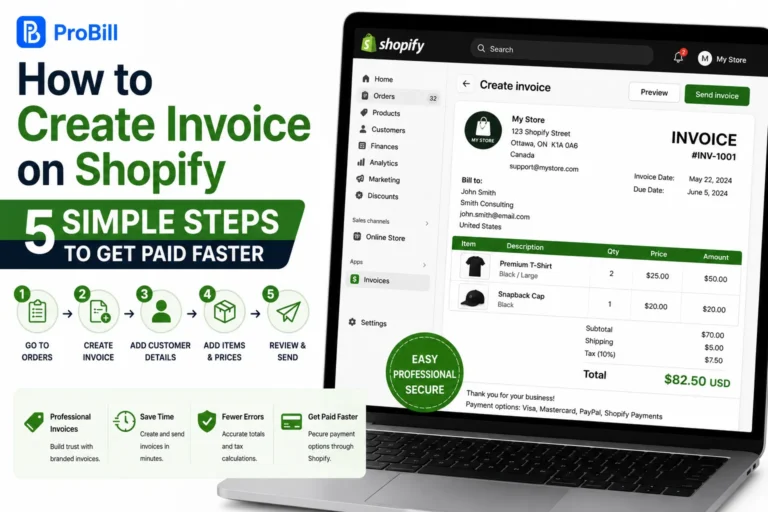
Creating an invoice on Shopify generally involves locating the order, generating the invoice document, and then delivering it to your customer. The fastest way is to access the order details in your Shopify admin panel, click the option to create or print an invoice, and then save the file as a PDF or send it directly via email. This process can be completed within minutes once you’re familiar with the interface. For the general steps involved in creating an invoice, see our guide on how to create invoices.
Using Shopify’s native features
Shopify allows you to generate basic invoices directly from each order’s admin page. However, the built-in invoice templates are minimal and don’t always meet professional standards, often missing advanced customization like branding or detailed payment terms. While Shopify does not have a dedicated “create invoice” button, you can print packing slips or use order details to manually compile invoices. This method works best for simple, low-volume invoicing needs but may become inefficient as order volume grows.
Using an online invoice generator (including a subtle mention of Probill invoice generator page)
For a smoother experience, many Shopify sellers turn to online invoice generators that integrate easily with Shopify orders. These tools automate invoice creation, allow customized branding, and streamline sending and tracking payments. For example, using a tool like Probill’s free invoice generator helps avoid manual errors and speeds up the invoicing process. Although you can technically create an invoice within Shopify, external invoice generators provide a professional edge and comprehensive features that Shopify’s native tools lack. You can explore options such as the free invoice generator for a straightforward user experience.
This quick answer section outlines how to create an invoice on Shopify with a focus on simplicity and practical steps, emphasizing when external tools enhance functionality beyond Shopify’s basic capabilities.
How to Create an Invoice on Shopify from an Order
Accessing orders in Shopify admin
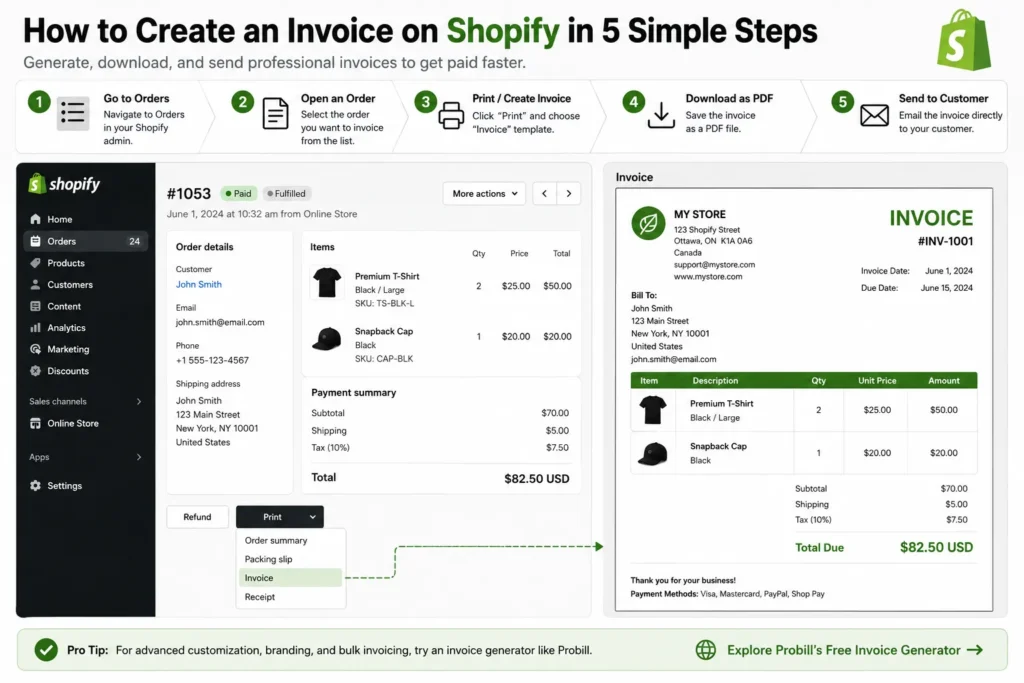
Start by logging into your Shopify admin dashboard and navigating to the Orders section. This area houses every purchase your customers make, serving as the base for invoice creation. For example, a small retail shop owner can quickly locate recent transactions here without scrolling through unrelated data. Efficient access to orders avoids pitfalls like delayed invoicing or mismatched details, which often happen when order retrieval is clumsy.
Generating invoice via Shopify order details
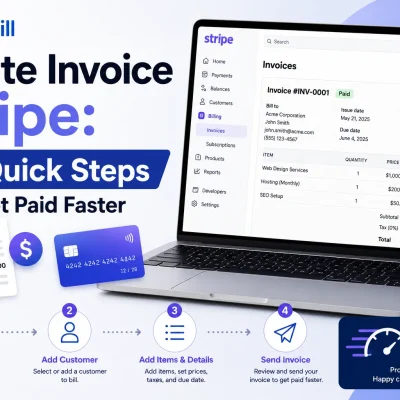
Within each order page, Shopify offers options to print packing slips or receipts, but not a dedicated “create invoice” button. To create an invoice Shopify sellers often export order details and format them into an invoice manually or with the help of third-party apps. Pro tip: copying essential fields such as customer info, purchased items, and payment terms directly from the order summary avoids mistakes common in rushed manual entry. Using a structured approach here saves time and ensures accuracy.
Saving and exporting invoices
Once the invoice is generated—either by manual compilation or with an app—it’s critical to save it in a durable format, typically PDF. Shopify’s print function can convert packing slips or order summaries into PDFs, but these lack professional polish. Exporting invoices in PDF ensures compatibility for sharing and archiving. Freelancers often store these PDFs systematically to track payments and audit financial records. If using external tools, make sure they support direct PDF export and easy emailing features to streamline your workflow. After preparing an invoice for a Shopify order, you’ll need to send it to the customer.
This section guides you through using Shopify’s order system to create invoices while highlighting practical challenges and workarounds to boost efficiency and professionalism in your invoicing process.
Methods to Create an Invoice in Shopify Efficiently
Manual invoice creation in Shopify
Manual invoicing in Shopify means extracting order details yourself and building an invoice using basic tools like spreadsheets or text editors. This method suits sellers with very low order volumes or those who require highly customized documents. However, it’s prone to errors like omitting taxes or incorrect totals, as everything depends on accurate copying from the order page. For example, a solo freelancer handling occasional custom orders might start here but will soon face delays and mistakes as complexity grows.
Using third-party invoice apps and tools
To overcome manual limitations, many Shopify users adopt third-party apps that connect with their stores to generate invoices automatically. These tools pull order data, apply taxes and discounts, and create professional-grade invoices instantly. Apps often support PDF export, branding, and client management, freeing sellers from repetitive tasks. Probill, for instance, offers an intuitive interface that integrates billing and payment tracking, ideal for small businesses seeking efficiency without technical hassle. Using such apps eliminates common manual pitfalls and speeds up the entire invoicing cycle.
Benefits of automation for freelancers and small businesses
Automation saves time, reduces human errors, and enhances professionalism—crucial advantages for freelancers and small businesses where every invoice affects cash flow. Automated invoices ensure consistent formatting and prompt delivery, minimizing payment delays. A boutique store owner can focus on sales instead of chasing invoicing details. Moreover, automated systems store client histories and payment records, simplifying bookkeeping and audits. These efficiency gains outweigh initial setup efforts, making automated invoice creation a must for growing Shopify sellers. For a hassle-free start, consider trying a free invoice generator that quickly integrates with your operations.
This section clarifies practical ways to create invoices on Shopify with a focus on balancing workload and accuracy, highlighting automation’s role in professionalizing your invoicing process.
Key Elements Required to Create an Invoice on Shopify
Essential invoice fields in Shopify invoices
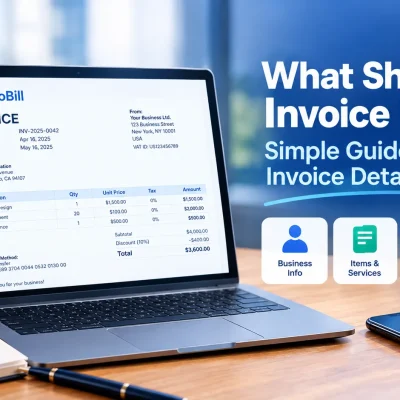
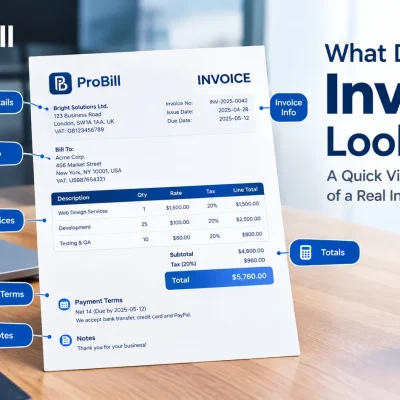
Every invoice on Shopify must include certain key fields to ensure clarity and legal compliance. These include:
- Seller’s business name and contact details
- Buyer’s full name and address
- Unique invoice number for tracking
- Date of issue and payment due date
- Description of goods or services provided with quantities and unit prices
- Applicable taxes and total amount due
- Payment terms and accepted methods
Missing any of these can cause payment delays or disputes. For instance, freelancers often lose payments because their invoices lack clear due dates or precise service descriptions. Always double-check that these essentials appear before issuing an invoice on Shopify.
Customizing invoices for professionalism
Shopify’s default invoices tend to look generic and offer limited formatting options, which can hurt your brand’s perception. Customizing invoices reinforces trust and encourages timely payments. Adding your logo, adjusting fonts, and including personalized notes reflects professionalism. For example, a small business that consistently sends branded invoices often reports smoother customer communication and fewer payment follow-ups.
To enhance customization without manual effort, consider using invoice templates or tools that allow you to set branding elements once and apply them automatically to every invoice. This approach saves time and maintains visual consistency.
Client and payment tracking essentials
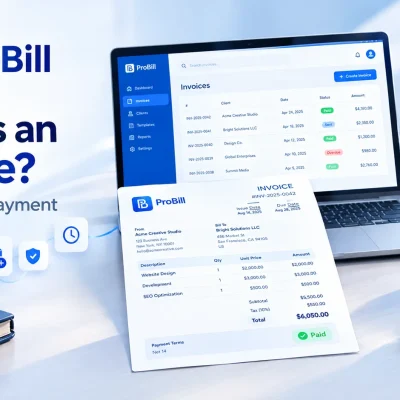
Tracking client information and payments directly from your invoices is crucial for effective bookkeeping and cash flow management. Essential elements include:
- Client contact details and unique identifier
- Invoice status: paid, pending, overdue
- Payment method used and date of receipt
- Notes on partial payments or outstanding balances
Without these, freelancers and small businesses risk losing track of who paid what and when, complicating tax reporting or client follow-ups. For example, missing payment tracking often leads to repeated billing errors and strained client relationships.
Using invoicing tools with built-in client and payment management can streamline this process, automatically updating statuses and generating reminders, which helps avoid manual tracking errors.
Ensuring your Shopify invoices have these key components prepares you for smooth operations, protects cash flow, and enhances your business image. For ready-to-use designs that include these elements, explore professionally crafted invoice templates to speed up your workflow and reduce mistakes.
Common Mistakes When Creating an Invoice in Shopify and How to Avoid Them
Missing invoice details
One of the most frequent mistakes when you create an invoice on Shopify is omitting crucial details such as payment terms, invoice numbers, or tax information. Missing these essentials often leads to payment delays and confusions. For instance, a freelancer who forgets to include the payment due date regularly experiences late payments because clients lack clear expectations. To avoid this, always verify that your invoice includes all mandatory fields before sending. Leveraging templates or tools can help ensure completeness and reduce human error.
Incorrect client info
Entering wrong client information—like misspelled names, incorrect addresses, or outdated contact details—is another common error that obstructs invoice delivery and payment confirmation. Small business owners have reported cases where invoices got lost or disputed simply because the billing address didn’t match their client’s records. Double-check client data during invoice creation in Shopify, especially if copying manually from orders. Using an integrated client management feature can automatically fill correct details, minimizing costly mistakes.
Delays in sending invoices
Delays in sending invoices directly affect your cash flow and reflect poorly on professionalism. Many entrepreneurs procrastinate or get bogged down by manual invoice creation and customization, causing late billing. For example, a boutique online seller who invoices days after delivering goods often faces delayed payments and customer dissatisfaction. The solution is to establish streamlined workflows, such as preparing invoice templates in advance or automating invoice delivery through apps, thus reducing wait times and improving payment cycles.
Preventing these mistakes when you create an invoice in Shopify not only accelerates payment but also reinforces your business’s reliability and client trust. For faster and error-free invoicing, consider practical solutions like a free invoice generator that integrates well with Shopify workflows. Additionally, ensure your invoices comply with standards outlined by tax authorities such as the IRS invoice requirements.
Tips to Create Invoices Faster and Without Errors in Shopify
Using templates and presets
Templates drastically reduce the time spent formatting invoices and prevent skipping essential fields. For instance, a freelancer who reused a basic template avoided repeatedly entering client details, cutting invoice creation time in half. Presets for taxes, payment terms, and item descriptions eliminate routine data entry errors. Shopify’s limited default templates make external solutions valuable—invoice presets from dedicated tools ensure consistency and reduce manual customization.
Leveraging client management features
Accurate client info speeds invoicing and reduces follow-ups. Manually typing client addresses invites errors that delay payments. Small businesses using client management features inside invoice tools can pull saved customer profiles instantly, eliminating repetition. These systems store contact updates automatically, so invoices never go to outdated emails. By centralizing client data linked to Shopify orders, users avoid typical mistakes seen when clients’ billing details change but aren’t updated on invoices.
Regular invoice review and updates
Relying on stale invoice formats or outdated payment terms creates bottlenecks. Freelancers that review and update their invoice templates quarterly catch issues like deprecated tax rates or missing legal disclaimers early. Regular audit avoids delays caused by unclear payment instructions or inaccurate tax calculations. Updating your invoice setup also helps reflect any new Shopify store policies or regulatory requirements, minimizing compliance risks.
Small tweaks like adding payment status indicators or new discount codes in templates keep your invoicing relevant and error-free over time.
Maintaining efficient invoicing on Shopify demands consistent use of templates, client management, and periodic reviews. For a time-saving and error-minimizing start, explore options like the free invoice generator which combines these features for seamless invoice creation.
Invoice Templates and Examples for Shopify Sellers
Types of invoice templates suitable for Shopify
Invoice templates for Shopify sellers range widely to match different business needs—from minimalist single-service invoices to detailed productized sales formats. Freelancers often prefer clean, simple templates that emphasize service descriptions and payment terms. Small retail businesses benefit from templates listing multiple line items, taxes, and discounts clearly. For example, an artisan selling handmade goods requires a template that shows individual products, quantities, and total due, while a consultant needs space for service breakdown and hourly rates. Choosing the right template type impacts not only professionalism but also client understanding and timely payment.
Customizing templates for branding
Branding your invoice template is critical for building customer trust and recognition. Customizations such as adding your logo, choosing color palettes that match your storefront, and including contact details make invoices appear official and polished. A small business owner reported a noticeable decrease in customer inquiries and payment delays after using a branded invoice template, as clients instantly recognized the document’s source. Beyond visuals, adding personalized payment instructions or thank-you notes can strengthen client relationships. Shopify’s native options limit customization, so exploring external template tools can unlock flexible branding without coding.
Where to find and download templates (mentioning Probill invoice templates page)
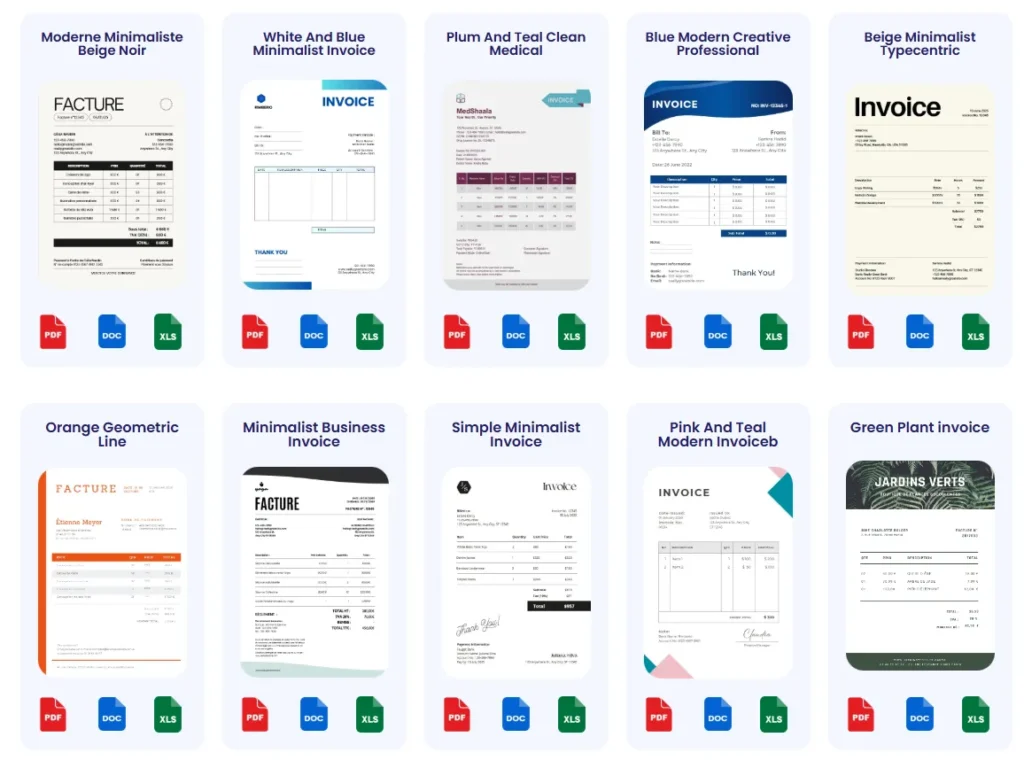
Finding ready-to-use invoice templates reduces setup time and ensures you meet invoicing standards from the start. Numerous platforms offer downloadable templates tailored to Shopify sellers. A practical resource is the Probill invoice templates page, which provides professionally designed templates optimized for common invoicing scenarios. These templates accommodate key invoice elements, support customization, and export to PDF for easy sharing. Downloading such templates helps freelancers and small business owners avoid common layout errors and fast-tracks invoice creation, letting you focus on running your Shopify store efficiently.
Utilizing the right invoice templates saves time, conveys professionalism, and reduces errors in your Shopify invoicing process. For quick access to versatile and brandable options, explore trusted sources like the Probill invoice templates that streamline how you create an invoice on Shopify.
Frequently Asked Questions about Creating Invoices on Shopify
Can I create invoices directly on Shopify?
Shopify does not offer a dedicated feature to create fully customized invoices directly. Instead, it allows printing packing slips or order receipts, which can serve as basic invoices. For professional invoices, most sellers export order details or use third-party apps that integrate with Shopify to generate and manage invoices efficiently.
How to create multiple invoices on Shopify?
Shopify’s native interface lacks batch invoice creation. To generate multiple invoices easily, sellers typically rely on third-party apps or invoice generators that sync with Shopify orders. These tools automate bulk invoice creation, save PDFs, and support sending them via email—saving hours compared to manual processing for multiple orders.
Are there free tools for Shopify invoicing?
Yes, several free tools help Shopify sellers create invoices, often with limited features. Probill offers a straightforward free invoice generator that integrates well with Shopify orders, providing customizable invoice templates, PDF export, and client management. These tools reduce errors and speed up invoicing without upfront costs. Explore options like the free invoice generator for easy invoicing.